How local water treats a Bosch dishwasher
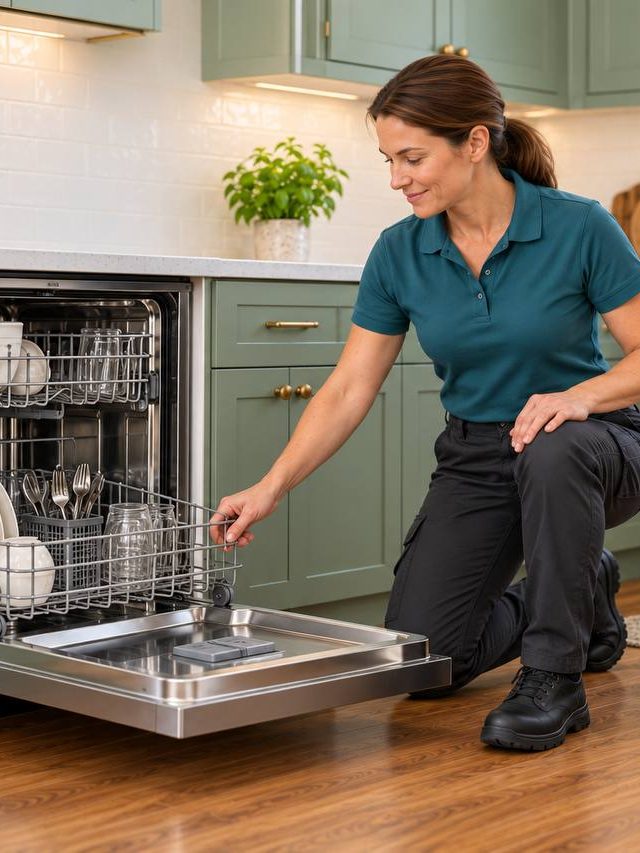
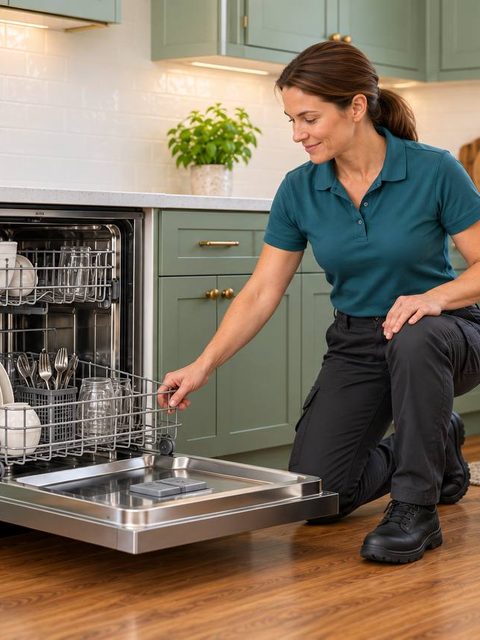
We meet Bosch dishwashers in many remodeled Olympia kitchens and in newer Hawks Prairie houses, usually from the 100, 300, 500 or 800 Series or the Benchmark line. They behave differently from most other brands. Most have no exposed heating element in the tub: water is warmed inside the circulation pump, and drying relies on condensation against the stainless tub, or on the zeolite mineral in CrystalDry models. That is why plastic containers often come out damp. There is no chopper either, so the filter in the tub floor catches everything and needs regular rinsing. Soft Olympia water makes detergent overdosing easy, while water from one of Lacey’s iron-tinged wells may paint the tub orange and slowly choke the inlet valve.
We repair Bosch machines as an independent company; Bosch has no hand in our work, and if your dishwasher, range or refrigerator is still inside Bosch’s warranty, we will send you to Bosch first. When the job is ours, the technician listens, then tests with the symptom in mind. A Bosch dishwasher that stops mid-cycle often has water in the base pan, which lifts a float and halts the machine, so we find the leak rather than just drying the pan. A cool, weak wash leads to a meter on the heat pump, the part that warms the water. For ranges and refrigerators the tools change to a manometer and thermometers, but the order holds: test, name the part, write one price.
What we repair under the Bosch badge
The tub-floor filter comes first, since a clogged one causes gritty dishes, slow draining and odor. Past that, we see drain pumps jammed by glass, check valves stuck open, heat pumps that stop warming the water, and door-seal leaks that fill the base pan. Many models shine a small light on the floor while running, and a cycle that never ends is often the first clue.
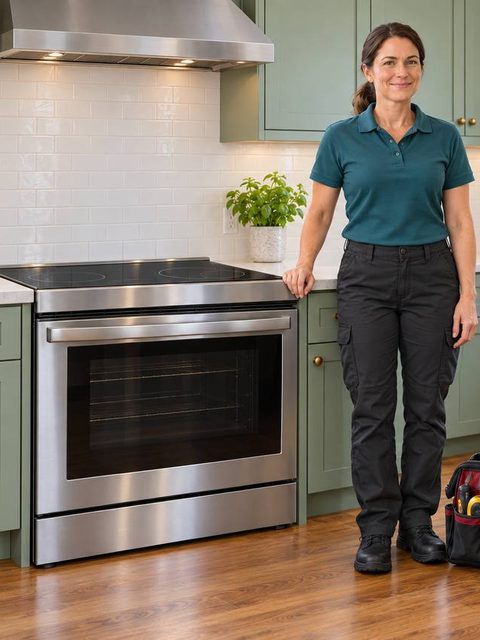
Bosch slide-in ranges come in gas, electric and induction versions. On gas models we see oven igniters that weaken and surface burners that click without lighting because a burner cap sits crooked or the spark electrode is dirty. Electric and induction models more often fail in elements or electronics, which stay with our technicians. Every oven gets a thermometer test.
The Bosch refrigerators we open are usually counter-depth French-door models, often set into cabinetry that leaves little room for air. When the fresh-food side warms, we check for evaporator frost, a quiet fan, dust on the condenser coil and a torn door gasket. Models with an internal water dispenser or ice maker also get a look at the inlet valve screen, which catches well sediment.
Where Bosch machines usually fail
| Machine | Common fault | What we check |
|---|---|---|
| Bosch 500 Series dishwasher | Stops mid-cycle and will not restart | Water in the base pan, float switch, leak source |
| Bosch 300 Series dishwasher | Water stays cool, dishes poorly cleaned | Heat pump heater, water temperature sensor, filter |
| Bosch 800 Series dishwasher | Water left in the tub | Filter, drain pump, check valve, hose loop |
| Bosch Benchmark dishwasher | Plastic items still wet at the end | Rinse aid level, door seal, cycle choice |
| Bosch gas slide-in range | Burner clicks but will not light | Burner cap seating, spark electrode, spark switch |
| Bosch French-door refrigerator | Fresh-food section slowly warming | Evaporator frost, fan motor, condenser coil, door gasket |
A Bosch dishwasher visit in Olympia or Lacey
A common Bosch call from Olympia’s Eastside: the dishwasher stopped halfway and sits with water in the tub. You get an arrival window from our scheduling desk; the technician’s first question is how the last few cycles went. The checking follows: the filter first, then the pump that empties the tub, the float switch, and any water in the base pan. Then you learn what failed and why, and the cost to fix it is written out as one number. Should you accept, the $99 already owed becomes a piece of that repair price; if not, the $99 closes the account. Pumps and float switches are often on board. Our care note covers filter rinsing and detergent dose.
Rinse the filter, go easy on detergent, and when a Bosch still misbehaves, our technicians will find out why.
Request serviceBosch repair questions
Why are plastic containers still wet in my Bosch dishwasher?
Most Bosch models have no exposed heating element to bake dishes dry; they rely on condensation instead. Hot dishes and the stainless tub shed their water, but plastic holds little heat, so drops stay behind. Keep rinse aid filled, unload the bottom rack first, and choose a drying option if your model has one. CrystalDry models do better, and none of this is a fault.
How do I clean the filter in my Bosch dishwasher?
First cut the power, either at the plug or at the breaker. Slide out the bottom rack, turn the round filter in the tub floor counterclockwise, and lift it out together with the flat mesh screen underneath. Warm running water and a soft brush clean both. Seat the flat screen first, then turn the cylinder back until it clicks into place. We suggest doing this every month.
My Bosch dishwasher stopped and will not restart. What happened?
Often a leak has put water in the base pan under the tub, which lifts a float switch and stops the wash to protect your floor. Switch off the breaker and do not tip the machine or keep restarting it. Our technician finds where the water came from, such as a door seal, pump or hose, repairs it and dries the pan.
Is Olympia’s soft water hard on a Bosch dishwasher?
Not by itself. Olympia’s water leaves little scale, which is kind to the heat pump and spray arms. The trouble is detergent: full doses meant for hard water leave film, suds and, over time, etched glass. Try a smaller dose, keep rinse aid filled, and see if cloudy glasses clear up before assuming anything is broken.
Is a Bosch counter-depth refrigerator worth repairing?
Often, because the faults we see most are fans, defrost parts, gaskets and dust on the condenser coil rather than the sealed system. Counter-depth models are also built to fit a particular opening, which limits replacement choices. We test first and tell you plainly what failed. If it is the sealed system, we explain what that repair involves before you decide.