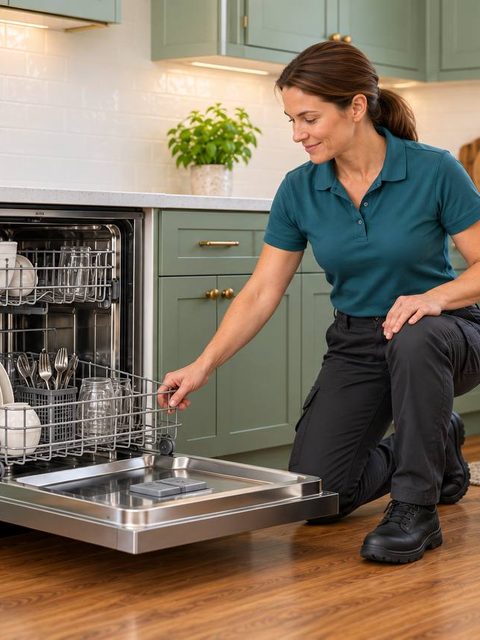
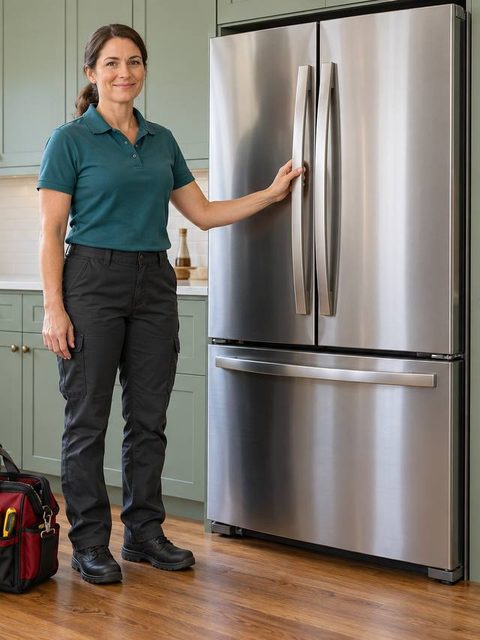
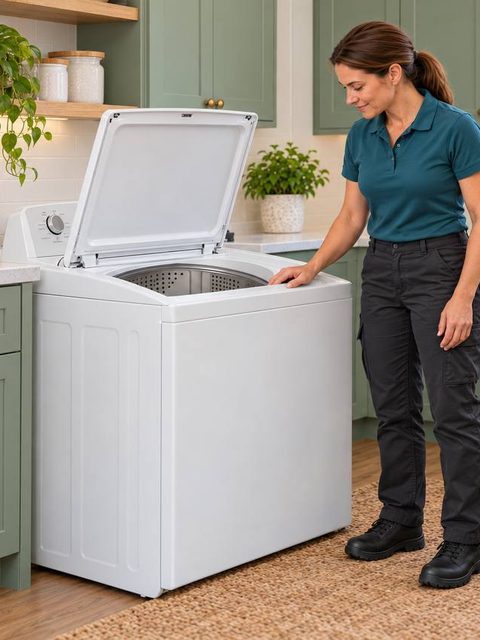
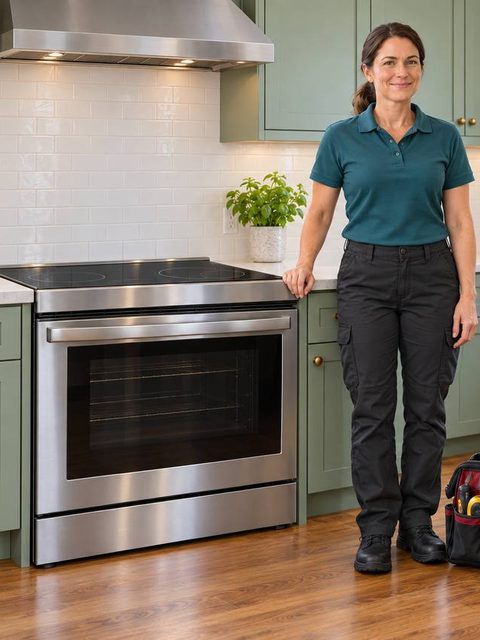
Also repaired
The other machines we look after
Tap a photo for that repair page.
An empty bin, thin hollow cubes, a dispenser whose auger groans but drops nothing: these rank among the quickest fixes we make.
Tap a photo for that repair page.
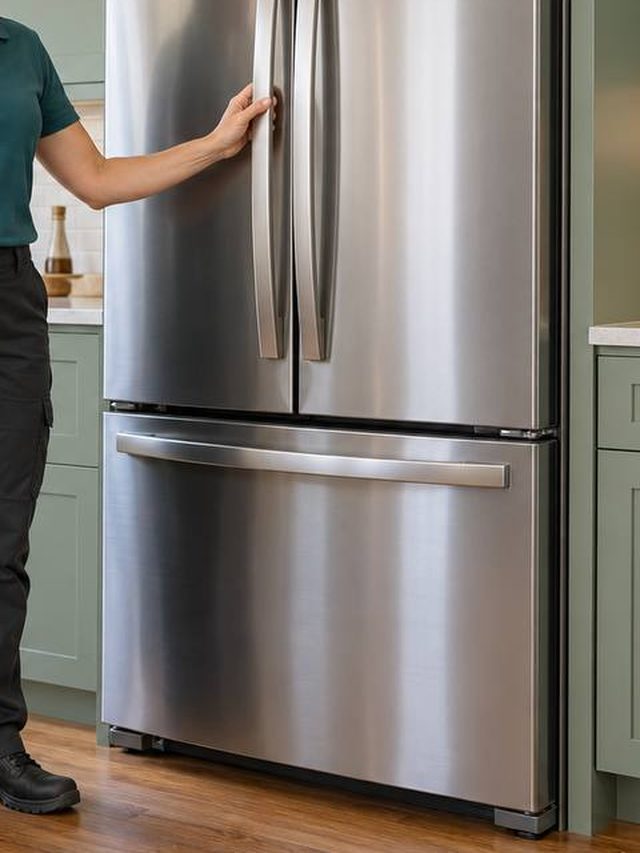
A refrigerator ice maker depends on a thin, steady stream of water, and that is where most trouble starts in Lacey, Olympia and Tumwater. Several of Lacey’s municipal wells, plus plenty of rural private ones, bring iron and manganese that lodge as grit in the fill valve screen and supply line until the cubes shrink or stop. Olympia’s soft water rarely scales the valve, but a water filter left in place too long still slows the flow. On the roughly 78 freezing nights a year, supply lines running along cold exterior walls or through crawlspaces chill, and a slow drip can freeze solid in the fill tube. Windstorm outages add a twist: a freezer that thawed and refroze often locks the ice maker inside a block of ice.
Ice maker repairs are routine work for our team, and most wrap up in one trip with parts we carry. Our technicians open with a few questions: when the ice stopped, whether water still runs from the door, and how old the filter is. The answers narrow things fast. If water dispenses but no ice forms, the module, its fill tube or the freezer temperature is suspect. If neither works, we look upstream at the filter, the fill valve and the supply line. We check the freezer with a thermometer, look for ice in the fill tube, time a test fill into the mold and meter the valve coil. Only then do we say which part failed, with the cost written out before a single piece is swapped.
We repair ice makers in refrigerators of every door style, whether the freezer sits on top, below, beside the fresh food section or behind French doors, including models with an ice compartment on the fresh food door, plus in-door water and ice dispensers with their augers, chutes and paddles. Brands on our route include LG, Whirlpool, Frigidaire, GE, KitchenAid, Café, Maytag, GE Profile, Kenmore, Frigidaire Gallery, Amana, Bosch and Electrolux. Freestanding ice machines are not part of our work; we stay with the ice makers built into home refrigerators. We are independent and tied to no manufacturer. A refrigerator young enough to be under its maker’s coverage should use that first, and we will mention it when you call.
When the door still pours water but the bin stays empty, the supply is reaching the refrigerator, and the fault sits closer to the ice maker. We work through the likely causes in order: freezer temperature first, then ice plugging the fill tube, a module that has quit, and a shutoff arm left in the up position.
Cubes that come out undersized or hollow tell us the mold fills short each cycle. A clogged refrigerator filter, iron grit in the fill valve screen or low household water pressure slows the fill, and the ice maker harvests before the cubes are complete. We time a test fill, check pressure at the valve and inspect the screen for sediment.
A mold and fill tube buried in ice usually trace to a valve that keeps weeping once it shuts, or to an outage that thawed the bin and refroze everything. The weeping keeps feeding the block. We thaw the assembly, check the valve for seepage, test the mold heater and fit a new valve if the old one cannot close tight.
If the bin is full but the dispenser gives nothing, the auger motor, the dispenser switch or the door flap solenoid may have failed, or cubes have fused into a clump around the auger. We empty the bin and break apart the clump, test the switch and the auger motor, and check the flap that keeps warm kitchen air out of the chute.
Water behind or under the refrigerator often comes from the compression fitting at the fill valve, a cracked plastic supply line, or a filter housing that was not seated after a change. Iron sediment can also keep the valve from closing fully. We shut off the supply, find the leak with the rear panel off, and replace the fitting, line or valve.
Off-tasting ice usually comes from an overdue water filter, cubes left unused in the bin for weeks, or open food in the freezer. On iron-bearing wells, a metallic taste can come straight from the supply. We check the filter date and its housing, flush the line, and suggest emptying the bin more often; whole-house filtration is plumbing work beyond ours.
| Part | What goes wrong | How we confirm it |
|---|---|---|
| Dual-outlet refrigerator fill valve | Iron grit clogs the inlet screen, or the valve seeps after closing | Timed fill into the mold and a coil resistance reading |
| Ice maker fill tube | Freezes shut from a dripping valve or a chilled supply line | Visual check at the mold inlet and a warm-water thaw test |
| Ice maker module | The motor or its thermostat fails, so the mold never harvests | Test harvest cycle and meter readings at the module |
| Refrigerator water filter | An overdue filter slows the fill and leaves small, hollow cubes | Flow check with the filter installed and again with the bypass plug |
| Dispenser auger motor | Stalls on fused cubes, or its windings open with age | Bin emptied, motor run directly and its windings metered |
| Dispenser door flap and switch | The flap sticks open and frosts the chute, or the switch fails | Switch continuity test and a check of the flap solenoid |
Ice maker trouble rarely decides the fate of a refrigerator. The module, fill valve, fill tube, filter housing and dispenser parts all come out and go back in without touching the sealed system, so a refrigerator that cools well is almost always worth an ice maker repair. The question changes when the ice maker is only one symptom among several: a freezer that also runs warm, frost building behind the panels, or a refrigerator with other failures stacking up. Then we look at the whole machine and tell you plainly what we find. Some owners also choose to switch the ice maker off and use trays, a fair choice we are happy to explain. The facts and the written figure are yours to weigh, and so is the decision.
Ice maker trouble is routine work for us, so book by phone or form; the $99 diagnostic is contained in the price of any repair you sign off on, and it is the one charge if you don’t.
Request serviceMost refrigerator ice maker repairs are quick, routine work for our technicians. Replacing a fill valve, clearing a frozen fill tube, fitting a new ice maker module or swapping a dispenser switch usually fits within a single visit, and those parts ride on our vans. The longer wait is often for the freezer to fill its first full bin afterward, which takes about a day.
Cold is the usual culprit. On Tumwater’s freezing nights, a supply line routed along an outside wall or beneath the house can chill enough to slow or freeze, and even a slight drip from the valve will turn the fill tube into a solid plug. Our technicians thaw it, check the valve for seepage, and show you where the line needs protecting from the cold.
It can. Some of Lacey’s city wells carry a touch more iron and manganese than the cosmetic guideline suggests, and rural private wells around the county can hold more. The sediment gathers in the fill valve’s inlet screen and in the refrigerator filter, which slows each fill and leaves cubes small. Changing the filter on time helps, and when the valve screen is clogged we replace the valve rather than leave a patched one.
The visit covers the testing: freezer temperature, fill tube, fill valve, filter, ice maker module and dispenser parts. You then learn which part is at fault and see the repair priced in writing. Should you go ahead, the $99 is one portion of that price rather than a separate fee. Prefer to switch the ice maker off and use trays? Then the visit comes to $99 and stops there.
Yes. Switch the ice maker off, or raise its shutoff arm, close the supply valve behind or under the refrigerator if you can reach it, and wipe up the water so flooring and subfloor stay dry. Leave the refrigerator running so food stays cold. A leak usually traces to the fill valve, a supply line fitting or the filter housing, all routine repairs for our team.
Yes. Door dispensers have a handful of moving parts: the paddle and its switch, the auger motor inside the bin, the flap that seals the chute and the water line that runs through the door hinge. We test each one, clear fused ice from the auger and replace what has failed. A dispenser that pours water but no ice usually needs an auger motor or switch, both regular parts for us.
Phone or the form. Mention the brand and what the machine is doing; our scheduling desk sets an arrival window.
Meter, thermometer, fill and drain timing, a manometer on gas lines. Then we tell you which part quit, in everyday words.
The full repair on paper before a screw turns. Our $99 visit is tucked into that number if you go ahead.
A test run, a tidy floor, warranty terms on the invoice and a short note on what to clean and when.
Book the $99 visit. Okay the written quote and it absorbs the $99; pass on it and $99 covers the whole call.