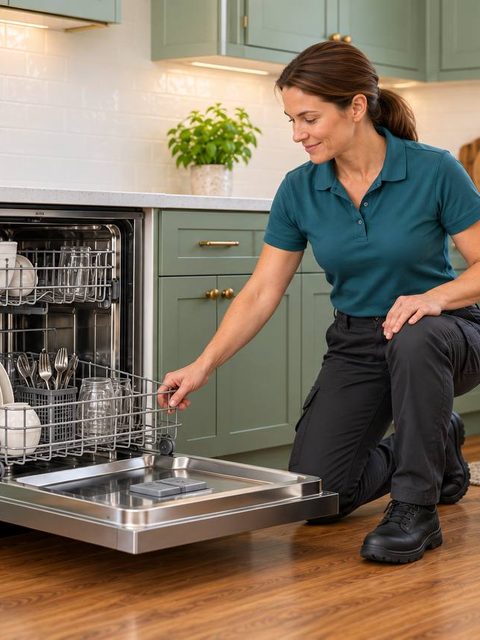
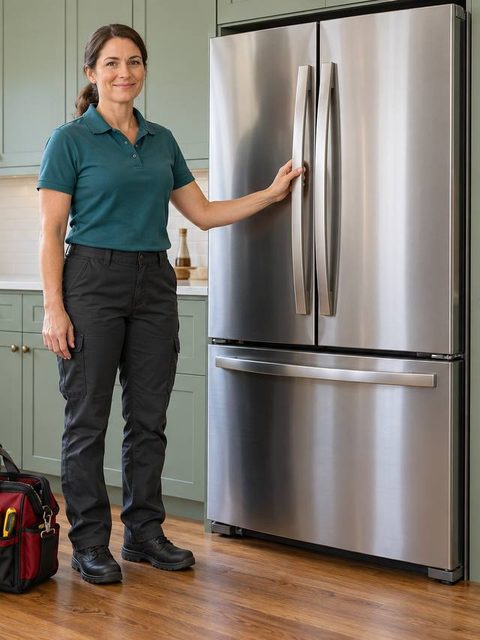
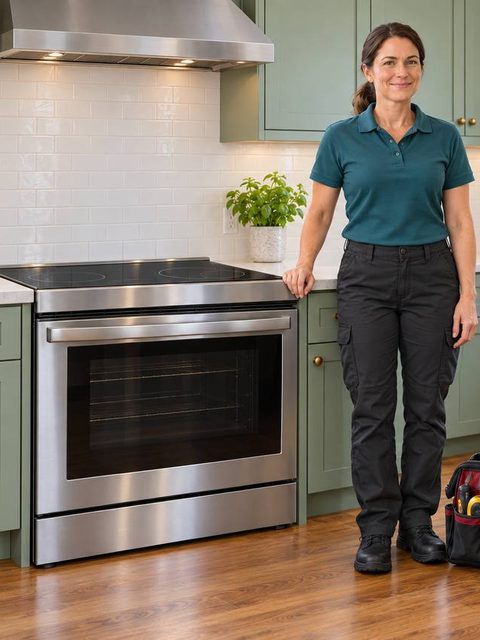
Also repaired
The other machines we look after
Tap a photo for that repair page.
A drum left brimming mid-cycle, a cabinet that creeps toward the wall during spin, a sour mildew smell at the door boot: each is telling you something specific.
Tap a photo for that repair page.
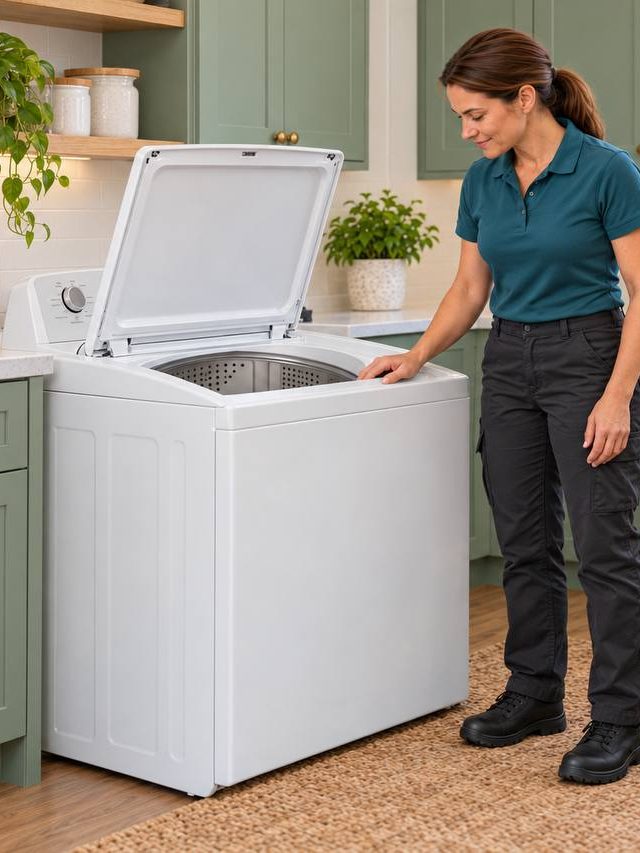
Washing machines in Lacey, Olympia and Tumwater live in damp rooms. Here the air stays clammy for months and rain shows up on about 160 days each year, so townhome laundry closets and rambler garages seldom dry out, and a front-loader’s door boot holds that moisture in its folds until mildew takes hold. Soft water, notably Olympia’s city supply, means a normal scoop of detergent makes far more suds than the machine expects, and oversudsing slows spins, stalls draining and leaves residue in the dispenser. Stacked pairs tucked into newer townhomes vibrate against their closet walls, while top-loaders in older subdivisions wear out suspension rods and motor couplings. Iron-bearing wells in parts of Lacey and the unincorporated county add rust spots on whites and grit at the inlet screens.
Our technicians ask about the last load: where the cycle stopped, what it sounded like, and whether water stayed in the drum. Then we run it. A drain test tells us whether the pump moves water or only hums, and the pump filter behind the lower panel on most front-loaders gets opened early, because coins, hair ties and baby socks cause more drain trouble than failed pumps. An empty spin test shows whether it is a load imbalance, worn shocks or a failed drive part. We check the lid or door lock next, since a washer that cannot confirm it is locked will not fill or spin. Last come meter readings on the inlet valve and motor, then the worn part is named and its cost written out.
Our technicians work on washers that load from the front or the top, agitator and impeller designs alike, plus stacked washer-dryer pairs, laundry centers with the washer built into one frame, and compact washers in condos and accessory dwellings. The brands we see most include Whirlpool, LG, Maytag, Samsung, Electrolux, GE, Kenmore, GE Profile, Amana, Frigidaire and Bosch compact models. We answer to no manufacturer, so we can speak plainly about which parts on your model tend to go and which usually last. A newer washer still inside its maker’s coverage should go to that warranty line first; our scheduling desk raises it at booking, sparing you a visit the maker would cover.
A washer that halts mid-cycle full of water usually cannot drain. On front-loaders the coin trap or pump filter is often packed with lint, hair ties or a small sock; on top-loaders a sock can slip under the agitator and reach the pump inlet. We open the filter, run a drain test, check the hose for kinks, then meter the drain pump.
In a front-loader, that sour smell comes from two hiding places: the boot’s creases up front and the outer tub hidden behind the drum. Damp laundry rooms, cold washes and heavy detergent doses all feed it. We look over the boot for splits and black mold, check the drain path for trapped water, and show you how to dry the boot after each load.
In a front-loader, a thud with each turn of the drum usually comes from tired shocks or a counterweight that has worked loose; bad drum bearings roar rather than bang. In a top-loader, the suspension rods and their springs are the usual culprits. We rock the tub by hand, check the shocks and dampers, and listen to the bearings with the drive belt off.
When a top-load washer fills and then sits, or the motor hums while the agitator barely moves, look to the drive: a worn motor coupling, stripped agitator dogs, a failed shift actuator or a slipping belt. A tired lid switch can stop agitation too. We test the lid switch with a meter, then check the coupling, shifter and belt with the cabinet open.
A puddle that forms during fill points to the inlet hoses, the fill valve or the dispenser drawer; one that forms during drain points to the pump, its filter cap or a torn tub hose. Soft water plus a heavy dose can also force foam past the boot. We run each stage of the cycle separately and follow the water back to its source.
Clothes that come out dripping usually mean the washer never reached full spin speed. A partly blocked pump, a load the machine judged off-balance, a worn drive belt or a lid lock that failed to engage can each stop it short. We run an empty spin, then a balanced test load, and meter the lock and motor before naming a part.
| Part | What goes wrong | How we confirm it |
|---|---|---|
| Drain pump and coin trap | Lint, coins and socks jam the impeller or clog the filter | Filter inspection, a drain test and a winding resistance reading |
| Front-load door boot | Tears, mildew or a pinched fold that holds water after washing | Close inspection of every fold and a leak check during fill |
| Lid or door lock assembly | The lock fails to engage, so the washer will not fill or spin | Meter test on the lock and switch through a start attempt |
| Shock absorbers and suspension rods | Worn dampers let the tub bang and the whole washer walk | Hand push test on the tub and a spin with a test load |
| Washer water inlet valve | Iron grit or a weak solenoid slows filling or lets water seep in | Flow check at each inlet and resistance readings on both coils |
| Drum bearings and tub seal | The seal wears, water reaches the bearings, and spin turns into a roar | Drum play check by hand and a listen with the belt removed |
A washing machine is usually worth repairing when the tub, drum and cabinet are sound and the fault is a pump, lock, valve, belt, shock absorber or control. Those parts wear as a matter of course, and replacing one sets a good washer back on its feet for years. The harder calls come with failed drum bearings on a front-loader, which often means a new outer tub as well, or a rusted cabinet on an older top-loader. In those cases we explain what the repair involves, how long a similar machine is likely to keep going, and what a new washer would change for your household. We never press either way; the price arrives on paper with our reasoning, and you take whatever time you need.
Book a washer visit by phone or form. Approve the work and the repair price includes the $99 diagnostic; hold off, and $99 is the full charge.
Request serviceFront-loaders seal tightly, so the moisture left after a wash has nowhere to go, and Olympia’s damp months keep laundry rooms humid. Soft water adds to it, because extra detergent leaves a film for mildew to feed on. Run a hot cleaning cycle with a washer cleaner, dry the door boot after each load, leave the door ajar and cut the dose. If the smell returns quickly, water may be trapped in the drain path, and we can find where.
Yes. Stacked pairs in tight closets are regular work for our technicians across Lacey, from Meridian Campus to the Hawks Prairie subdivisions. We slide the pair out with care, lift the dryer down when the repair calls for it, and set everything back level so it does not rattle against the walls. Clearing a path in front of the closet before we arrive makes the visit quicker.
Give it a few minutes, since many front-loaders hold the lock until the drum stops and the water level drops. If water is still inside, the washer probably cannot drain, and the lock stays closed on purpose. Unplug the washer, then open the pump filter with towels and a shallow pan ready. Never force the door or pry the lock; if it stays shut, our technicians will open it without damaging the latch.
The visit is $99. Our technician tests the washer, finds the failed part and hands you a written price. When you approve that repair, the $99 is already inside it, so the same visit is never billed twice. When you turn it down, the $99 is the whole amount owed for the visit, and you keep our notes on what failed and why.
We do. LG and Samsung front-loaders are common across Tumwater, Lacey and Olympia, alongside Whirlpool, Maytag, Electrolux and GE machines. On both brands we most often replace drain pumps, door locks, door boots, shock absorbers and drum bearings. We test the parts behind the symptom, so the written price follows a real diagnosis, and a machine young enough for its maker to cover gets sent back to that maker first.
A little movement with a heavy load can happen, but a washer that travels is out of balance or out of level. Check that all four feet touch the floor and their lock nuts are snug, and spread bulky items like bedding more evenly around the drum. If it still walks with a normal load, the shocks or suspension rods have probably worn, and we can test them on the visit.
Phone or the form. Mention the brand and what the machine is doing; our scheduling desk sets an arrival window.
Meter, thermometer, fill and drain timing, a manometer on gas lines. Then we tell you which part quit, in everyday words.
The full repair on paper before a screw turns. Our $99 visit is tucked into that number if you go ahead.
A test run, a tidy floor, warranty terms on the invoice and a short note on what to clean and when.
Book the $99 visit. Okay the written quote and it absorbs the $99; pass on it and $99 covers the whole call.