Olympia · six repairs
Olympia’s soft water and older housing shape most of the appliance repairs we do here: oversudsed washers, dishwashers leaving film on glasses, and ranges and dryers fitted into rooms built long before them.
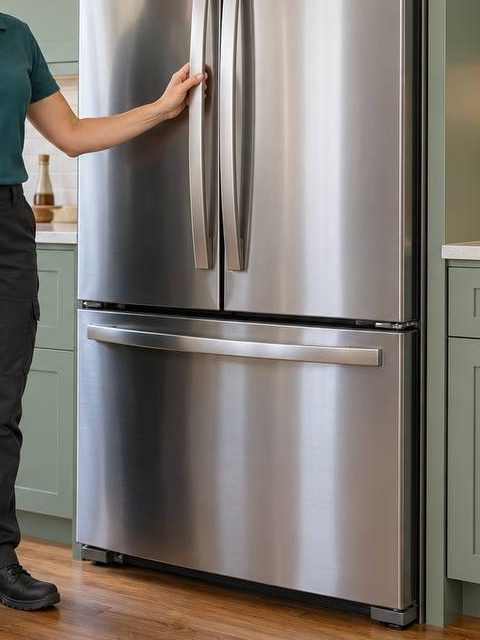
Olympia’s housing runs older than its neighbors’. The median home was built around 1982, close to half were standing by 1980, and roughly one house in nine is older than 1940, from the South Capitol historic district to the bungalow streets of Northeast Olympia and Bigelow. Newer appliances end up in rooms that were never drawn for them: a dishwasher cut into an old cabinet run, a stacked laundry pair in a former pantry, a French-door refrigerator pressed into an alcove sized for something narrower. None of that stops a repair, but it changes how we work. Our technicians pull machines out carefully, protect old floors, check the outlet and gas connector behind each one, and look at how the room itself is treating the appliance.
Most of Olympia’s tap water comes up from the McAllister Wellfield, and at about 50 to 60 mg/L it counts as soft. That keeps scale low, which is good news for heating elements and fill valves, but it also means detergent goes much further than the dosing line on the bottle assumes. Too much soap in a front-load washer causes oversudsing, slow spins and a gray residue on dark clothes. Too much in a dishwasher leaves film and, over time, etches glassware for good. On many Olympia calls, part of the fix is a smaller scoop. We still test the drain pump, pressure switch and spray arms, because suds can hide a real mechanical fault, and the care note spells out a dose that suits your water.
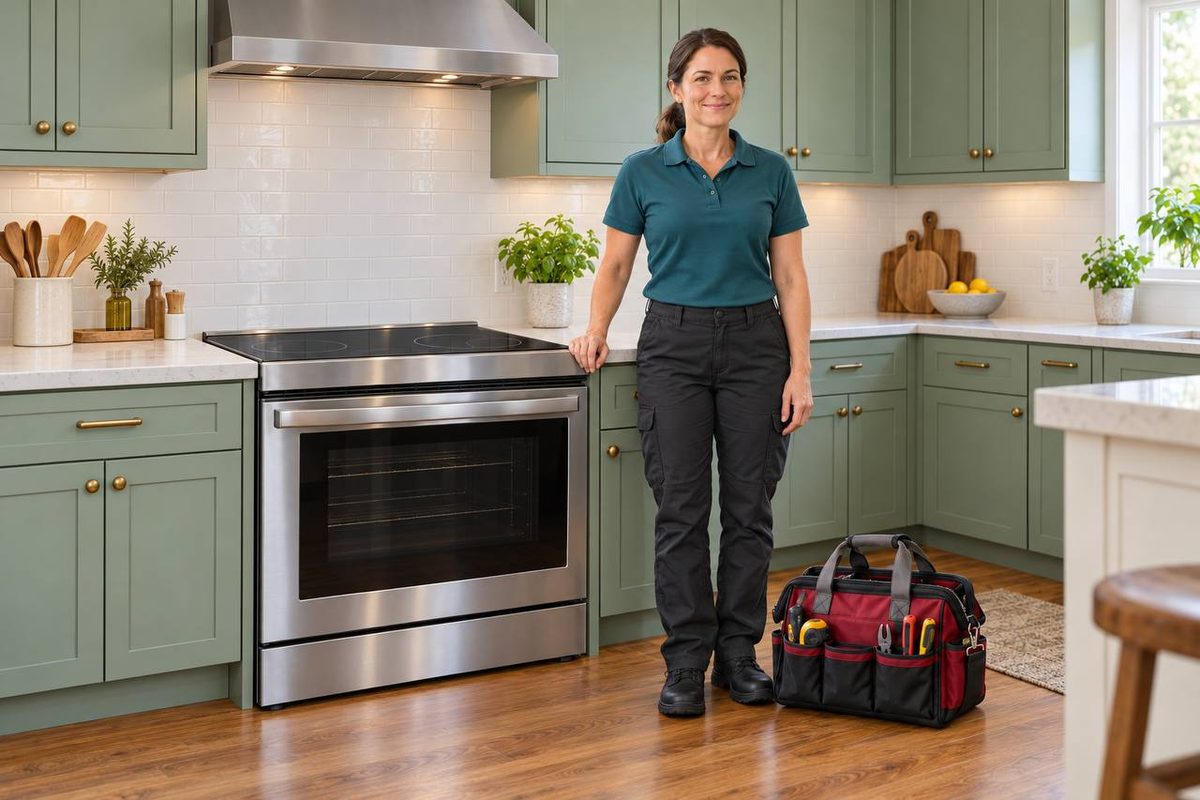
A visit in Olympia runs the same way it does anywhere on our routes. Our scheduling desk settles an arrival window, and the technician first wants to hear what you have noticed: the smell, the noise, the point in the cycle where it quits. Tests follow; the worn-out part is identified by its everyday name, and a written price lands on the counter. Say yes and the $99 visit becomes one line within that total; turn it down and your spending stops at the $99. Downtown condos near Percival Landing, Westside ramblers and the 1950s to 1970s streets of Southeast Olympia all get the same finish: a test cycle, a tidy floor, the warranty written on the invoice, and a care note written for the machine in front of us.
Homes in the South Capitol historic district were built long before anyone planned for a dishwasher or stacked laundry, so appliances often sit in converted pantries or basements. Dryer vents take roundabout paths, and damp air settles wherever the laundry lives. We check airflow from drum to hood, the door boot on front-loaders, and whether the washer pumps uphill to its standpipe.
Bungalows in Northeast Olympia and around Bigelow have compact kitchens where the range, dishwasher and refrigerator share very little wall. Tight spacing keeps condenser coils warm and bends dishwasher drain hoses sharply behind the cabinet. We slide machines out with care, straighten or reroute what we can, and say in the care note how much breathing room each appliance needs to stay healthy.
Westside ramblers keep everything on one floor, which usually means a short dryer vent through an outside wall and a hood that fills with fir needles and moss by midwinter. Homes around Goldcrest face the same rain and the same firs. We find gas dryers slow to light, garage freezers fighting cold nights, and washers whose door boots stay damp between loads.
The 1950s to 1970s subdivisions of Forest Hills and Holiday Hills have seen several rounds of appliances, and often a remodel or two. What ages with them is the hidden part: dryer ducts through crawlspaces that collect condensation, older gas connectors, and outlets tired from decades of plugs. Our technicians look at all of it and tell you when a problem is an electrician’s job.
Calls from Cooper Point are as varied as its houses: wall ovens that stop heating halfway through a roast, French-door refrigerators with iced-over evaporator coils, gas dryers that click without lighting. Where tall firs shade a lot, we look at the exterior vent hood for needles and moss, and where ducts cross a crawlspace, we check for trapped condensation before blaming the dryer itself.
Condos near Percival Landing often hide a stacked laundry pair in a hallway closet, with a vent run no one has seen since the building went up. Our technicians read the airflow, clear the lint within reach, and check the washer drain and pan. Compact dishwashers in galley kitchens get a filter and spray arm check, and we follow your building’s access steps.
| Appliance | What we see in Olympia |
|---|---|
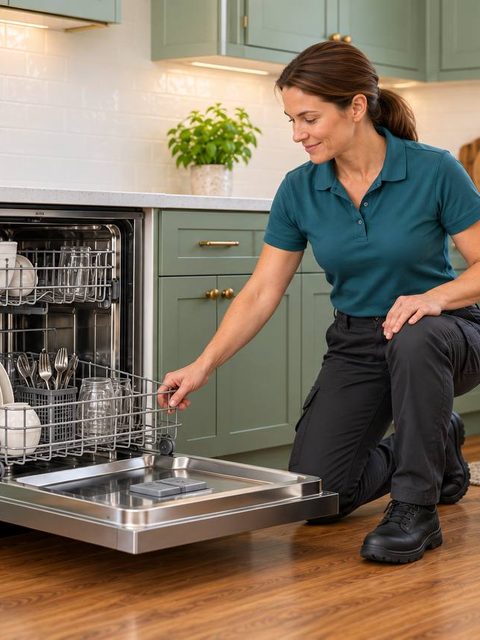
| Dishwashers | Soft water brings little scale but plenty of film and etched glassware from overdosed detergent, along with worn spray arms, cracked racks and clogged filters in older kitchens. |
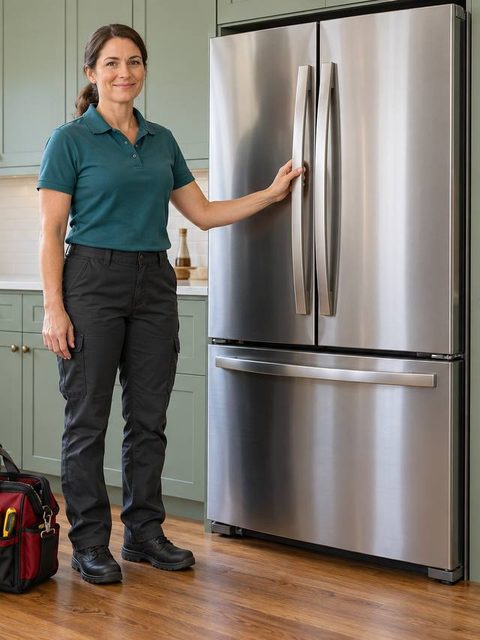
| Refrigerators | Units wedged into alcoves sized for narrower models and running warm coils as a result, plus failing evaporator fans, defrost heaters and door gaskets that have lost their seal. |
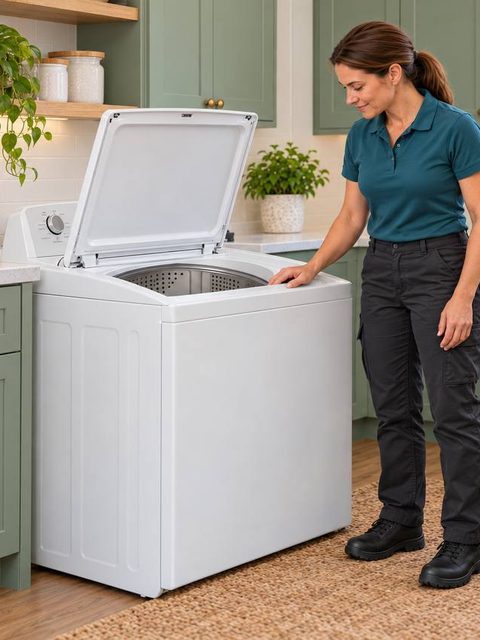
| Washing machines | Oversudsing from full-dose detergent on soft water, slow spins and gray residue, and mildew in door boots wherever the laundry sits in a basement or damp closet. |
| Dryers | Gas dryers in homes on PSE natural gas, electric dryers elsewhere, and vent runs through crawlspaces or old walls that trip thermal fuses and overwork the heating parts. |
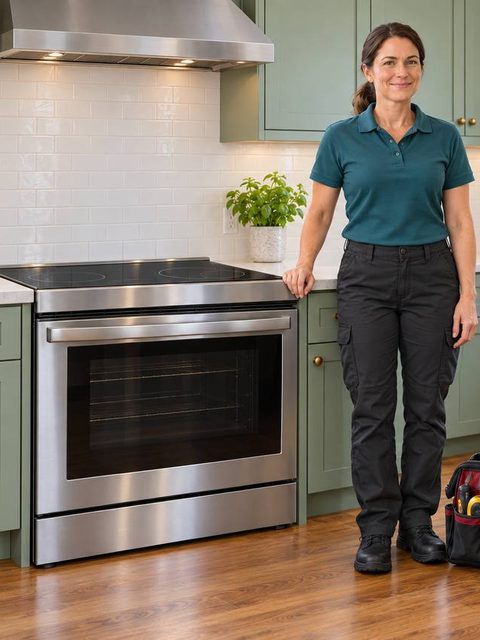
| Ovens and stoves | Oven igniters that glow without lighting the gas, electric coil tops with loose terminals, split bake elements, and wall ovens that drift off their set temperature. |
| Ice makers | Frozen fill tubes after an outage, water filters left long past due, and worn dispenser parts; scale is rare on this water, so we test the valve and module first. |
Olympia’s water is soft, so scale rarely drives our repairs here; detergent habits do. The weather does much of the rest. Rain shows up on something like 160 of the year’s days and totals about 50 inches, November is the soggiest month, and humidity sits close to 80 percent, which keeps door boots damp and fills crawlspace dryer ducts with condensation. Fall and winter windstorms cut Puget Sound Energy service, and when power returns we see refrigerators that need help restarting and ranges whose clocks and controls need a reset. Summer usually peaks in the upper 70s, but in June 2021 the airport thermometer south of town climbed to 110°F, and garage refrigerators and freezers labored right through it.
When an Olympia kitchen or laundry room stops cooperating, our scheduling desk will set a window; you read the price in writing before we start, and approving it pulls the $99 visit into that total.
Request serviceMost often it is the water, not the washer. Water in Olympia is soft, which lets a normal capful of detergent build a tall head of foam, so a full dose leaves suds that slow the drain and confuse the spin. Try a quarter to a third of the usual amount for a week of loads. If the suds shrink but the drain stays sluggish, our technicians will test the drain pump and pressure switch.
Yes. Many Olympia homes predate the machines inside them, and we plan for it: floor protection, a careful pull from the alcove, and a look at the outlet, gas connector and vent behind the unit. If the house wiring or a wall outlet turns out to be the real problem, we say so plainly, since that job belongs to an electrician rather than an appliance technician.
We do. Condos near Percival Landing and elsewhere downtown are regular calls for us, usually for stacked laundry pairs, compact dishwashers and refrigerators in tight galley kitchens. When you book, add any building entry steps, parking notes or elevator details to the form so the technician arrives ready. The written price, the care note and the warranty on the invoice work the same as in any house.
It is identical across all three cities. The visit pays for a technician’s time, the tests and a written price. Once you agree to that price, the visit fee is already counted in it. Decide against the fix, and the $99 covers the call with nothing added. If we need to order a part, fitting it takes a later stop with no trip fee attached.
Two different problems look alike. A film that wipes off with a little vinegar usually comes from overdosing detergent on soft water, or from an empty rinse aid reservoir. Cloudiness that stays put after wiping is etching, and it is permanent on that glass. Cutting the dose helps both. If the film keeps coming back, we test water temperature, the spray arms and the fill.
Phone or the form. Mention the brand and what the machine is doing; our scheduling desk sets an arrival window.
Meter, thermometer, fill and drain timing, a manometer on gas lines. Then we tell you which part quit, in everyday words.
The full repair on paper before a screw turns. Our $99 visit is tucked into that number if you go ahead.
A test run, a tidy floor, warranty terms on the invoice and a short note on what to clean and when.
Request a window. Our $99 visit melts into any repair quote you okay, and the care note is written in plain words.