Maytag before and after 2006
Maytag was its own company until Whirlpool bought it in 2006, and that date splits the machines we find. Older Maytags, such as the Neptune front-loaders of the late 1990s and 2000s and the top-loaders built in Maytag’s own plants, still turn up in Lakes district and Southeast Olympia laundry rooms. Most Maytags sold since then share their design and many parts with Whirlpool machines. Fuel matters as much as age. More than a third of the houses in these three cities heat with gas, and plenty of them dry laundry with it too; past the city limits, the dryer burner may draw on a propane tank instead. A Maytag Gemini range, with two ovens stacked in one body, sits in some kitchens too.
Neither Maytag nor Whirlpool has any stake in our company, and should your Maytag still sit inside its maker’s coverage period, send it there before you call us. After that, the fuel decides the first test. On a gas or propane dryer, our technician watches the igniter glow, checks the flame sensor and valve coils with a meter, and checks the gas pressure feeding the burner on a manometer, since a propane tank running low can mimic a failed part. Electric models get their own sequence: continuity readings across the high-limit thermostat, then the thermal fuse, then the heating coil. Either way we check the vent, because a long, damp duct through a crawlspace can slow drying badly enough on its own to look like a broken machine.
Maytag laundry, cooling and cooking
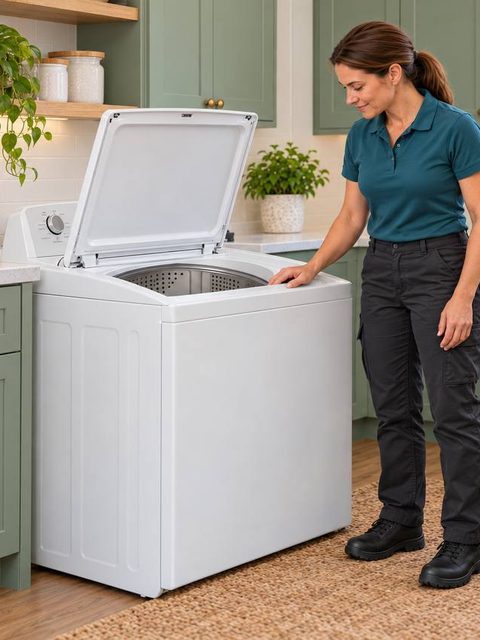
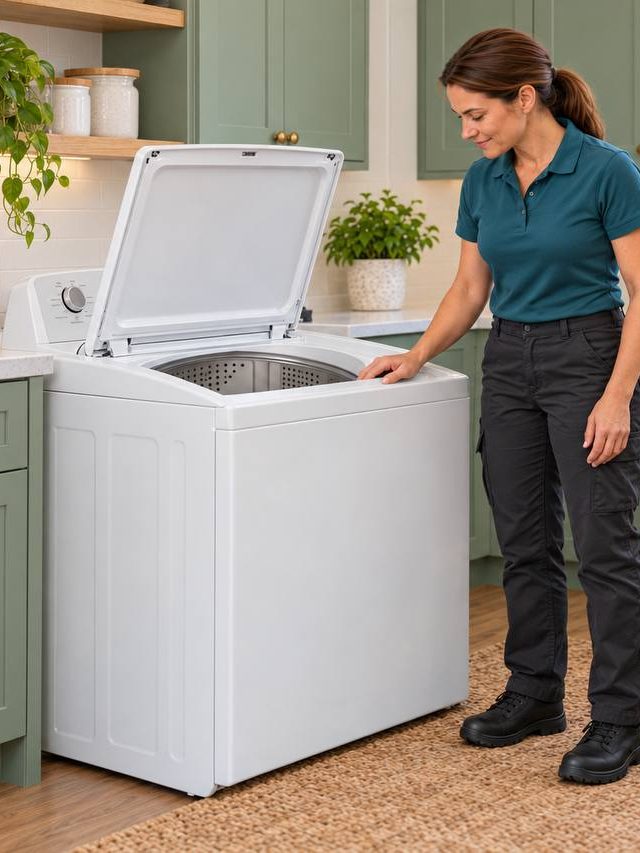
Bravos and Centennial top-loaders bring three repeat complaints: the lid will not lock, the basket will not spin, or the water will not leave. Lid locks, shift actuators, drain pumps and worn basket drives answer most of them. Front-loaders, from old Neptunes to current models, fight door-boot mildew in damp laundry rooms and grow bearing noise with age.
Gas Maytag dryers that run cold usually have weak valve coils or a cracked igniter; electric models lose heater elements and thermal fuses. Newer Maytag dryers share rollers, belts and idler pulleys with Whirlpool models, so a noisy drum is often fixed on the same visit. We clear the vent hood of lint, moss and fir needles before we leave.
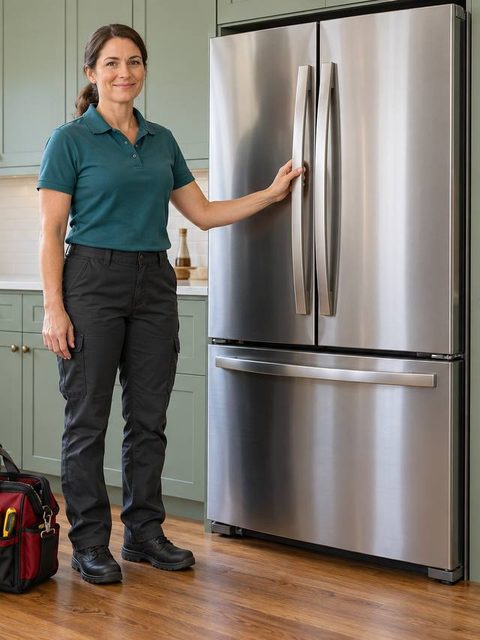
A Maytag refrigerator built since 2006 is usually Whirlpool inside, so we see the same defrost heaters, evaporator fans and inlet valves. Older ones date from the years when Maytag also owned Amana. If the fresh-food side is warm, we look for frost on the evaporator and test airflow through the damper; in a dusty garage, the condenser coil comes first.
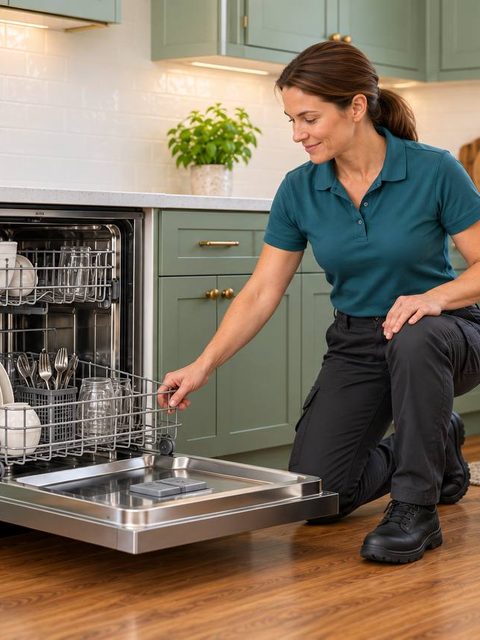
Most Maytag dishwashers we see run on Whirlpool designs, so pumps, latches, spray arms and inlet valves are familiar. Heavy detergent doses and an unrinsed filter explain a lot of poor cleaning in soft-water Olympia kitchens; when water sits in the tub after a cycle, a kinked hose or a tired drain pump is the usual cause. When dishes come out damp, we test the heating element and the vent.
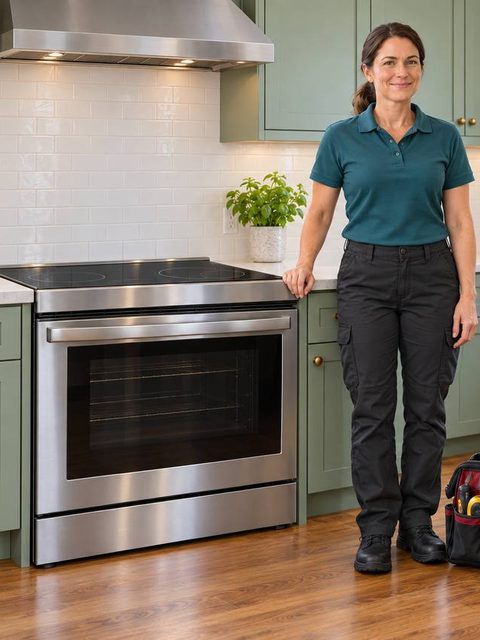
Gemini ranges put two ovens in one body, so a symptom in the upper oven can come from a different element or sensor than one in the lower. Gas Maytag ranges lose igniters; electric ones lose bake elements and surface element switches. We run each oven to temperature with a thermometer and, on gas, check supply pressure with a manometer.
Maytag faults by fuel and machine
| Machine | Common fault | What we check |
|---|---|---|
| Maytag gas dryer | Heats briefly, then goes cold | Valve coils, flame sensor, supply pressure |
| Maytag propane dryer | Weak flame and slow drying | Tank level, regulator pressure, burner orifice |
| Maytag electric dryer | Runs but blows cool air | High-limit thermostat, thermal fuse, heating coil |
| Maytag Bravos top-loader | Basket will not spin | Lid lock, shift actuator, basket drive |
| Maytag Neptune front-loader | Musty smell and slow drain | Door boot, drain pump, drain hose |
| Maytag Gemini double-oven range | Lower oven slow to heat | Bake element or igniter, oven sensor |
A Maytag visit from call to care note
In Holiday Hills, a Maytag gas dryer tumbling cold through a wet November week is a familiar call. Our desk sets an arrival window, and at the door the technician wants to know how long drying has taken lately. Then we watch the igniter, meter the valve coils and flame sensor, and look along the vent for condensation and lint. What failed is then explained without jargon, and one figure goes down in writing. Approving the work tucks your $99 inside that total; decide against it and $99 covers everything we did. We carry igniters and coils as standard stock, and the care note covers the lint path and the outside hood.
Gas, propane or electric, old Maytag or new, we test before we talk parts and leave a care note behind.
Request serviceMaytag repair questions
Is my newer Maytag built by Whirlpool?
Very likely, if it was made after 2006, when Whirlpool bought Maytag. Many newer Maytag washers, dryers, refrigerators and dishwashers share their design and parts with Whirlpool models. Older Maytags, including Neptune front-loaders and machines from the years Maytag owned Amana, differ inside. The model tag tells our technicians which family your machine belongs to and which parts to bring.
Will your technicians work on a Maytag gas dryer that runs on propane?
Yes. Propane dryers use a different burner orifice and pressure than natural gas models, so our technician confirms the conversion, checks the tank and regulator, and reads pressure with a manometer before blaming the igniter or valve coils. Gas and propane work stays with our technicians; at any whiff of gas, close the tank or appliance valve only if that is safe, get everyone outdoors and phone your propane supplier from there.
Why do clothes come out of my Maytag dryer damp in winter?
Cold, damp air in a crawlspace or attic chills the vent duct, so moisture condenses inside, mixes with lint and narrows the run. Two-story houses, with their long duct runs, have it worse through the foggy months. Empty the lint screen after each load, and step outside now and then to see that the hood flap swings freely. If loads still take two cycles, we measure airflow and trace the duct.
Are old Maytag Neptune washers still worth repairing?
Sometimes. A Neptune whose tub is solid and whose bearings run quietly can keep going with a door boot, pump or door switch. If the bearings roar or the tub support has corroded, the repair grows larger than the machine warrants, and our technician will tell you so after testing. You decide with one written price in hand.
Do the two ovens in a Maytag Gemini range fail separately?
They can. Each oven usually has its own heating parts and temperature sensor, so a fault in the lower oven may leave the upper one baking normally. That actually helps diagnosis. Our technician runs both ovens with a thermometer, meters each element or igniter, and names the part that failed rather than replacing anything the two ovens happen to share.