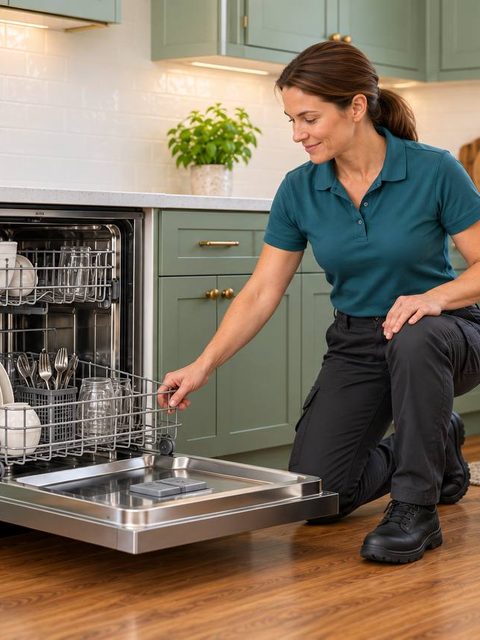
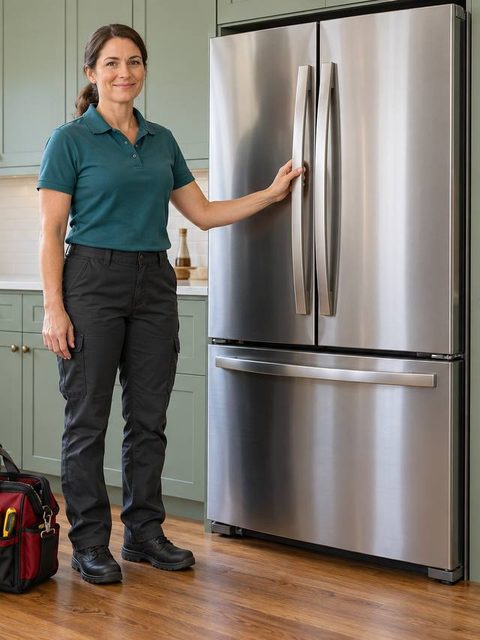
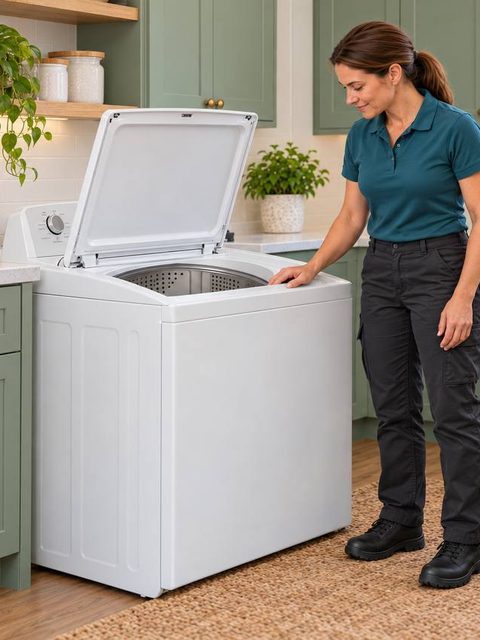
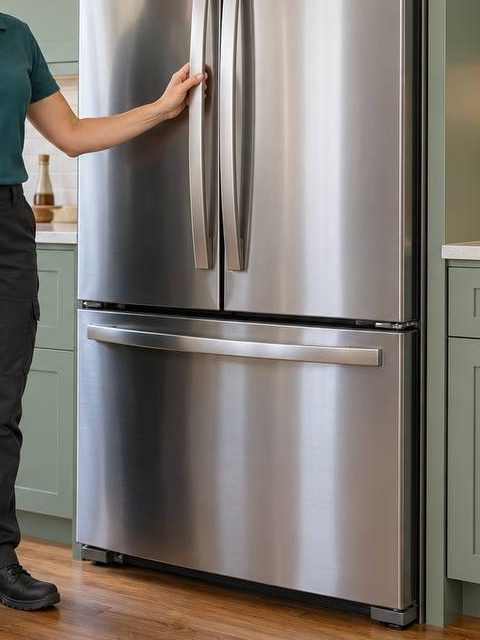
Also repaired
The other machines we look after
Tap a photo for that repair page.
An oven stalling below temperature in holiday week, a gas burner sparking without catching, a cooktop zone gone dark: our team repairs gas, electric and induction cooking across Lacey, Olympia and Tumwater.
Tap a photo for that repair page.
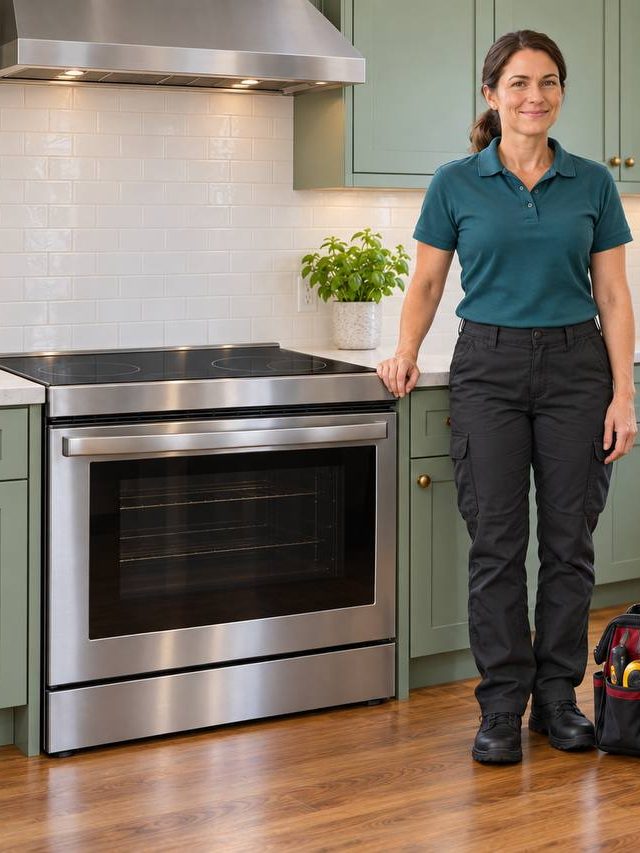
Cooking appliances in Lacey, Olympia and Tumwater split roughly along the gas line. Where natural gas reaches the street, gas ranges are common, and on the rural edges they run on propane; elsewhere, electric coil, smooth-top and induction models fill the kitchens. Older Olympia houses often pair a built-in wall oven with a counter cooktop installed decades ago, while builder-grade freestanding ranges line newer subdivisions in Lacey and Tumwater. Our busiest weeks follow the calendar: an oven asked to hold a turkey for hours in November, or a self-clean cycle run the day before guests arrive, is the moment a tired bake element, igniter or thermal fuse gives up. Windstorm outages add another pattern, with electronic controls that come back confused once the power returns.
Our technicians start with what you noticed, whether that is a sluggish preheat, sparking with no flame, a dead spot on the glass or an odd smell. Then we measure. An oven thermometer shows whether the cavity actually reaches the set temperature and how widely it swings. Electric ovens and ranges get resistance readings on both heating elements, top and bottom, plus the oven sensor and each surface switch. On gas and propane models we measure the igniter’s current draw, watch the flame pattern at each burner, check the spark module and use a manometer to confirm pressure at the regulator. Induction cooktops get a check of pan sensing and the cooling fan. Every test comes before a diagnosis, and every diagnosis comes with one written price.
We repair freestanding and slide-in ranges, single and double wall ovens, gas, electric and induction cooktops, dual-fuel ranges with a gas top and electric oven, and propane models on rural properties. Brands we work on include Whirlpool, Frigidaire, GE, KitchenAid, Café, Samsung, GE Profile, LG, Maytag, Frigidaire Gallery, Bosch, Kenmore, Electrolux and Amana. Microwaves are outside our work. We are an independent company, unconnected to any manufacturer, and an oven still under its maker’s coverage belongs with the maker first. Gas connections, burner valves, live wiring and control boards are work for our technicians alone, and before we leave a gas job, each fitting we handled gets tested for leaks.
With gas, a slow preheat usually points to a tired hot-surface igniter: it still glows, yet pulls too few amps for the safety valve to open. With electric, the same symptom comes from a scorched spot on the bake element or a sensor whose readings have wandered. We check the cavity with a thermometer, measure igniter draw or element resistance, and test the sensor.
A burner that sparks without catching often has a cap sitting off-center, ports clogged by boil-overs, or moisture left from cleaning. When clicking continues after the knob is off, a spill has usually reached a spark switch. We seat and clean the caps, dry the switches, test the spark module and check gas pressure at the regulator.
When the door will not release once self-clean finishes, the usual cause is a failed lock motor, a lock switch the control cannot read, or a thermal fuse that opened from the heat. Self-clean runs hotter than any recipe, which is why it finds weak parts. We test the lock assembly and fuse, and we never force the latch.
When one radiant zone under the glass stays dark, the element itself, its infinite switch or a limiter may have failed. If a zone glows at full heat whatever the knob says, the switch contacts have usually welded together. Meter readings on the element and its switch tell us which failed, and we look over the glass for cracks that would make any repair unsafe.
An induction zone that ignores a pan may be right to: the base has to be magnetic and sit flat. If a known good pan is rejected, the cooling fan, a power board or a coil connection is suspect, and heat is the usual cause. We confirm with a magnet test, check the fan, and inspect the board and coil for heat damage.
A brief whiff as a burner lights is normal; a smell that lingers is not. Turn every knob off, open a window, avoid switches and flames, and if the smell is strong, get out of the house before phoning the gas utility. For a faint, persistent smell, our technicians check the valves, fittings and connector with leak solution and a manometer.
| Part | What goes wrong | How we confirm it |
|---|---|---|
| Oven bake element | A hot spot burns through, and the element may spark | Visual check for blisters and a resistance reading |
| Gas oven igniter | Weakens with age and glows without opening the safety valve | Amp draw reading while the oven calls for heat |
| Oven temperature sensor | Drifts out of range, so the oven runs hot or cool | Resistance at room temperature compared with the model’s specification |
| Surface burner spark switch | Spills short the switch, and the burners click nonstop | Continuity test with each knob turned off and on |
| Oven door lock motor and switch | The lock jams after self-clean or never engages for cleaning | A watched lock cycle and a meter test on each switch |
| Radiant element and infinite switch | The element opens, or the switch contacts weld at full heat | Element resistance and switch output through each knob setting |
Ranges and ovens are among the longest-lived appliances in a kitchen, so most faults are worth repairing. Elements, igniters, sensors, spark switches, door locks and burner parts can be replaced on nearly every model, and the cavity, burners and cabinet usually outlast them by years. The cases that tip toward replacement are a cracked glass cooktop on an older range, a failed control board on a model where the board is no longer made, rust through the oven floor, or a gas valve fault on a unit near the end of its life. Wall ovens deserve extra thought, because a new one has to fit the existing cabinet cutout. We lay out those facts with one written price and leave the choice to you.
Describe to our scheduling desk how your oven or stove is acting. When you approve a repair, its price already counts the $99 diagnostic; if you stop there, the $99 is where the bill ends.
Request serviceVery often, yes. Igniters of the hot-surface kind lose strength over the years; the glow looks normal, but the amperage sags under the level that opens the gas valve, so the oven warms sluggishly or never gets there. It is not a do-it-yourself part, because the work touches the gas valve and wiring. Our technicians measure the draw, confirm the valve is sound and replace the igniter, usually from stock on the van.
Often, yes, if you call early. November brings a rush of ovens across Olympia, Lacey and Tumwater, so book as soon as you notice a problem rather than the day before. Bake elements, igniters and sensors are usually swapped in a single visit from parts we carry. For a part that needs ordering, you get a realistic timeline, and our return with it is not a separate trip on your bill.
Yes. Induction cooktops are turning up in newer and remodeled kitchens across Lacey and Tumwater, and we repair them along with radiant glass, coil and gas cooktops. Most induction faults we see involve heat: a clogged cooling fan, a stressed power board or a loose coil connection. We test pan sensing, the fan and the coils, and explain whether a repair makes sense for your model before any work begins.
Self-clean is safe when the oven is healthy, but it runs far hotter than any baking temperature, and that heat is hard on thermal fuses, door locks, sensors and controls. Remove the racks unless the manual allows them, wipe up heavy spills first, stay home during the cycle and keep the kitchen ventilated. Many owners do fine with a gentle wipe-down and an occasional low-heat or steam clean instead.
A single $99 visit fee. Our technician tests the range, oven or cooktop and hands you a written price for the repair. Accept it, and that figure already accounts for the $99. Pass on it, and the day’s total holds at $99, with a clear note of what failed to keep.
Uneven baking usually traces to one of four things: an oven sensor reading off, a bake element partly burned out, a sluggish convection fan, or heat slipping past a worn door gasket. Pan placement and dark bakeware play a part too. We measure the cavity temperature across a full heating cycle, test the sensor and fan, and check the gasket before replacing anything, so the fix matches the cause.
Phone or the form. Mention the brand and what the machine is doing; our scheduling desk sets an arrival window.
Meter, thermometer, fill and drain timing, a manometer on gas lines. Then we tell you which part quit, in everyday words.
The full repair on paper before a screw turns. Our $99 visit is tucked into that number if you go ahead.
A test run, a tidy floor, warranty terms on the invoice and a short note on what to clean and when.
Book the $99 visit. Okay the written quote and it absorbs the $99; pass on it and $99 covers the whole call.