Olympia · more repairs
Suds creeping from a front-loader across a basement floor are a common Olympia sight, because the city’s soft water turns a normal detergent dose into far too much.
Olympia washers live in some unusual places. In the city’s pre-1940 houses, roughly one home in nine, laundry often ended up in a basement or an enclosed back porch, with a floor drain, an old standpipe and a circuit shared with other loads. Southeast subdivisions, built across the fifties, sixties and seventies, usually park the washer out in the garage or behind a hallway door, and downtown condos stack a compact pair behind folding doors. Every one of them fills with soft McAllister Wellfield water, roughly 50 to 60 milligrams of hardness per liter, so detergent foams faster than the label assumes. Add air that seldom dries out and basements that stay cool and damp through the November rains, and front-load door boots grow mildew quickly while leftover residue turns into odor.
A South Capitol owner calls because the LG front-loader in the basement stops mid-cycle with water and thick foam in the drum, and the door won’t unlock. That lock is the washer protecting itself, and we never force it. Our technician asks about the detergent and how much goes in, then runs a drain test. Heavy suds on soft water can make a washer read itself as still full, so we check the pressure sensor hose for foam and residue. Next we open the drain pump filter, where socks, coins and hairpins collect, and meter the pump. If the pump is sound and the foam was the culprit, we run a rinse to clear it, reset the machine and show the owner a dose that suits Olympia water.
Laundry in the historic district tends to live in a basement, where the washer pumps up to a standpipe or laundry sink and the foundation keeps the air cool and moist. We see mildewed door boots, rusted cabinet corners and drain pumps straining against a high discharge, so we check drain height, hose and pump before anything else.
Many Eastside houses have laundry tucked into a mudroom, back porch or kitchen corner tacked on decades after the original framing. Uneven old floors let a washer walk and bang during spin, which wears suspension rods, shocks and drum bearings. We level the machine, test the suspension and listen to the bearings before naming any part.
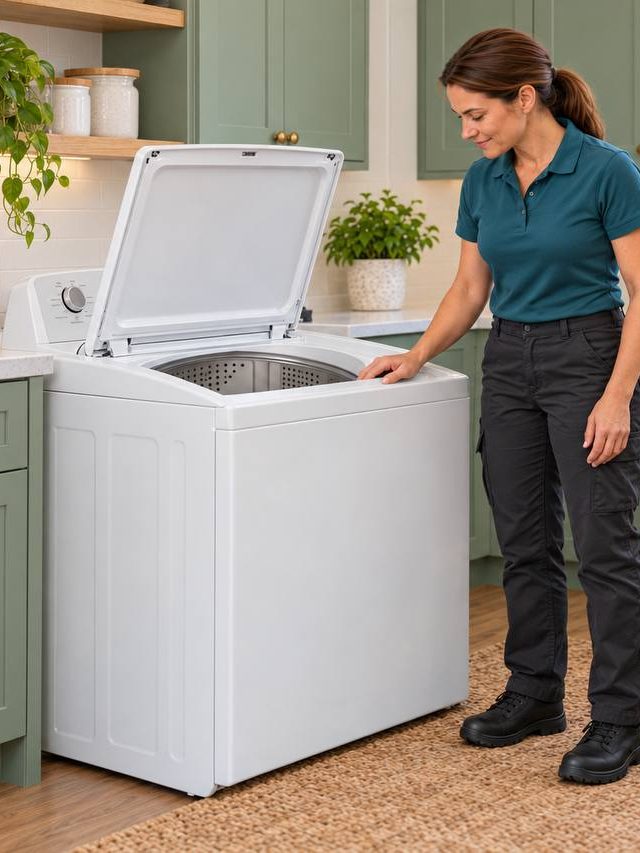
In these 1950s-to-1970s subdivisions the washer often sits in an attached garage, where winter cold stiffens hoses and slows a fill. Top-load Whirlpool, Maytag and Kenmore machines are common, and we see worn lid locks, lid switches and agitator couplers. We test each switch and the drive system with a load in the tub.
Condos near Percival Landing usually rely on stacked or compact washers in a closet, often a Bosch, LG, Samsung or Electrolux unit. Tight closets mean poor airflow, kinked drain hoses and vibration that carries through the building. We slide the pair out carefully, check the drain hose and pump, and confirm the washer sits level before we leave.
Too much detergent in soft water makes foam that fools the pressure sensor, slows the spin and leaks from the dispenser drawer or door. We check the pressure hose and sensor, the drain pump and the door boot, then run a clearing rinse and show you a smaller dose for Olympia water.
A front-loader in a cool Olympia basement holds moisture in the rubber door boot, and mildew follows within weeks. We look over every fold of the boot for splits and caught debris, check for a slow pump that leaves water behind, and replace the boot if a tear is letting water out.
A washer that shakes and walks during spin usually has worn shocks, suspension rods or dampers, or an uneven floor beneath it, and older Olympia floors often share the blame. We set the feet level, load-test the suspension and rotate the empty drum slowly to catch any bearing grind.
On freezing nights garage hoses and valves get cold, and a partly clogged inlet screen shows up as a slow or incomplete fill. We check water pressure at the hoses, clean or replace the inlet screens, and meter both solenoids on the fill valve before suggesting a replacement.
A stacked washer that stops with water in the drum usually has a blocked pump filter, a kinked drain hose behind the pair or a failed pump. In downtown Olympia condos we pull the stack out with care, clear the drain path and test the pump before quoting a repair.
A request by phone or the website form reaches our scheduling desk, which confirms an arrival window and asks where the washer sits, basement, garage or closet, so the technician comes prepared. We listen first, then run fill and drain tests, check the door lock or lid switch, and meter the pump, valve and motor. We tell you in ordinary language which part wore out, and one price goes down in writing. The visit costs $99. Give the repair a green light and that amount sits within its price; hold back and the visit is the extent of the bill. Common pumps, valves, boots and switches usually ride in our vans. A full test cycle follows the fix, and the invoice carries the warranty, alongside a care note.
After the last load of the day, leave the front-load door and the detergent drawer ajar to dry, and wipe the folds of the door boot. On Olympia’s soft water, start with about half the HE detergent the bottle suggests so suds and residue don’t feed mildew.
Whether your washer lives in a South Capitol basement or a Percival Landing closet, our team can test it, fix it and leave simple habits for keeping the drum fresh. Ask for a visit, and the failing part and its written price will be clear to you before we begin.
Request serviceOlympia’s taps deliver soft water, and soft water whips detergent into far more lather than your old supply probably did. The extra foam can fool the pressure sensor, slow the spin and leave residue that turns sour. Cut the dose to about half, use HE detergent in HE machines, and run a rinse to clear old suds. If foam keeps coming, we check the pump and sensor.
Usually both play a part. Cool, damp basement air keeps a front-loader’s door boot and detergent drawer from drying, and residue from overdosing on soft water feeds mildew. We check the boot for tears and trapped items, clear the drain pump filter, and confirm the pump empties the tub fully. Leaving the door open between loads and running a monthly cleaning cycle make a real difference afterward.
Yes. We work on stacked and compact washers from LG, Samsung, Bosch, Electrolux, Whirlpool, GE and Maytag, among others. Before the visit we ask about parking, elevators and any building entry rules. We slide the pair out onto floor protection, test the drain path and pump, and set the washer level again before leaving. Still under the maker’s warranty? Use that coverage first, since we are independent of every brand.
Often it is. Top-load washers from Whirlpool, Maytag, Kenmore and GE are built around parts we can test and replace in place, such as lid switches, couplers, pumps and fill valves. Repair makes less sense when the tub is rusted through, the transmission has failed on an old machine, or several parts are wearing out at once. We lay out the choice plainly with a written price, and you decide.
Start with the breaker and any GFCI outlet in the laundry area, since outages and surges often trip them. Then cut power to the washer at the plug for a short while to reset the control. If it still won’t start, the door lock, lid switch or control may have taken the hit. Each gets a meter check; we then point out the one that failed and write up its price.
One $99 visit to track down the fault, then a quote on paper. Go ahead with it and those $99 are tucked inside the total.