Why front-loaders turn musty around here
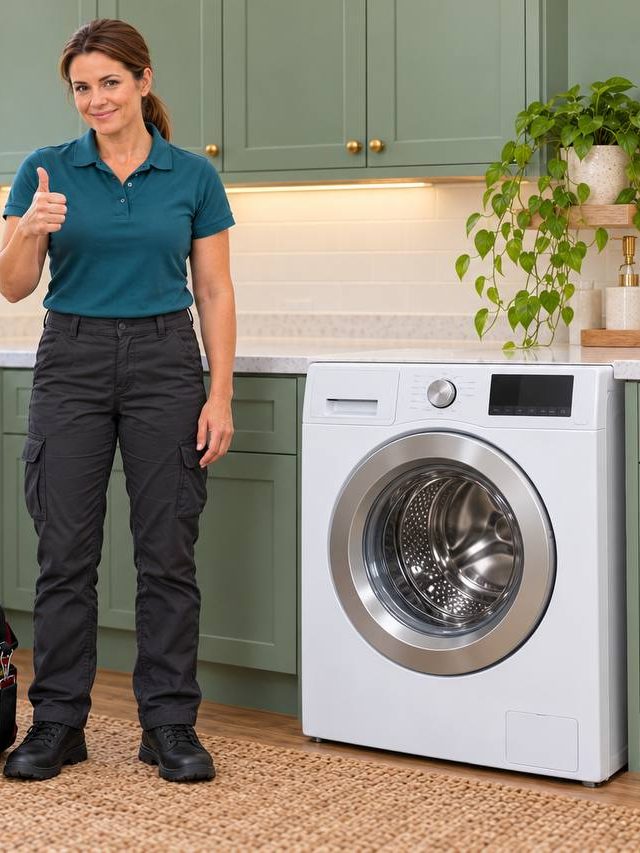
Front-load washers save water by sealing tight, and that tight seal is also why they smell. The rubber door boot has folds that hold rinse water after every cycle, along with lint, hair and undissolved detergent. Close the door on that and the drum becomes a warm, dark box. Around Olympia, Lacey and Tumwater, indoor humidity often sits near 80 percent through the rainy months, so little dries on its own. Laundry closets in townhomes and hallway nooks rarely have a window, and many lack a fan. Add soft Olympia water, where a normal-looking scoop of detergent is really too much, and the leftover suds give mildew something to feed on.
Left alone, that film does more than smell. Mildew stains the boot black and eventually cracks the rubber at the lower fold, which then leaks onto the floor. Coins, hair ties and sock fuzz collect at the drain pump filter until draining slows to a crawl or the machine halts partway through a load, still full. Residue that builds on the back of the outer tub can break loose in gray flakes that land on clean clothes. On older machines we also find the aluminum spider arm behind the drum corroded by years of damp and detergent, until it cracks. By then the fix is a door boot, a drain pump or a full bearing job.
A monthly door boot routine
- 01Switch the washer off first
Unplug the washer or turn off its breaker before you reach into the boot or open the lower access panel. Lay a towel on the floor and keep a shallow pan nearby, because the drain filter step releases water that sits in the pump housing between loads.
- 02Peel back and wipe every fold
Pull the lower edge of the door boot toward you and wipe inside each fold with a cloth dipped in warm water and a little dish soap. Pick out hair, lint and anything lodged in the small drain holes along the bottom. For dark spots, a diluted bleach solution on the cloth, rinsed afterward, usually lifts them.
- 03Empty the drain pump filter
On most front-loaders a small panel sits at the lower front corner. Open it, pull the little drain tube or cap and let the water run into the pan, then turn the filter counterclockwise and ease it out. Rinse off lint, remove coins or buttons, and thread it back snugly so it cannot leak.
- 04Soak the detergent drawer
Pull the dispenser drawer out, pressing the release tab most drawers have. Soak it in warm water, scrub the softener and bleach compartments with an old toothbrush, and wipe the slot it slides into, where gray slime likes to hide on the roof of the opening. Dry everything before sliding it back.
- 05Run a hot cleaning cycle
With the drum empty, run the tub-clean cycle or the hottest, longest setting with a washer-cleaning tablet or the amount of bleach your manual lists. Never mix bleach with vinegar or other cleaners. Once a month is enough for most households, and more often if the laundry room stays damp.
- 06Leave it open to dry
Once the day’s final load is done, wipe the boot dry with a towel, move clothes to the dryer right away, and leave the door and drawer cracked open until morning. If small children or pets could climb in, prop it only while someone is home, or close it once the drum is dry.
Supplies for the routine
- Old towels and a shallow baking pan
- Mild dish soap and a soft cloth
- An old toothbrush for the drawer
- Washer-cleaning tablets or plain chlorine bleach
- HE detergent and a measuring cap you actually read
- Your owner’s manual, for the filter location
When a smell means a repair
Hand the job to our technicians when the drum is still holding water after a cycle finishes, when the drain filter is clear but the washer still will not pump out, or when you spot a tear or split in the door boot. Call us as well for a grinding or roaring spin, a drum that knocks against the cabinet, or a door that stays latched after the cycle. The drain pump, door lock, boot and bearings sit behind panels that also hide wiring, and a door lock should never be forced or defeated just to get the laundry out.
Front-loaders in Lacey, Olympia and Tumwater homes
Olympia’s city water is soft, near 50–60 mg/L, and it dissolves detergent quickly, so the dose that works in harder-water towns leaves suds here. In Lacey, hardness depends on which well feeds your street, and iron from certain wells can tint a pale door boot orange-brown. Our long rainy season keeps laundry rooms damp for months. When a front-loader still smells or drains poorly after this routine, our team comes out, tests the pump and seal, and writes up a price. You pay $99 for that diagnosis; it rolls into the repair once you approve and is the whole bill if you pass.
A few minutes on the door boot each month keeps a front-loader smelling like clean laundry. When the drain or the door is the true culprit, our technicians will take it from there.
Request serviceQuestions on this care note
I wash on hot. Where is the mildew smell in my front-loader coming from?
Hot water alone does not reach the folds of the door boot or the drain filter, and those are where the smell starts. Too much detergent makes it worse, because the extra suds leave a film that mildew feeds on. Wipe the boot, empty the filter, measure detergent carefully and leave the door open to dry after the last load.
Should I clean the drum with vinegar or bleach?
Pick one, never both together, and check your manual first. Many makers list chlorine bleach or a washer-cleaning tablet for the tub-clean cycle, and some caution that frequent vinegar can dry out rubber seals. Whatever you use, run it through an empty drum and follow it with a plain rinse so nothing lingers on the next load of clothes.
How can I tell if the door boot needs replacing?
Look for a split or pinhole in the lower fold, rubber that stays black after cleaning, or a puddle forming at the machine’s feet during a wash. A torn boot leaks on every load and keeps smelling because water sits in the tear. We replace boots on LG, Whirlpool, Maytag and Electrolux front-loaders, which means removing clamp rings and, on many models, the front panel.
Is a top-load washer less likely to smell?
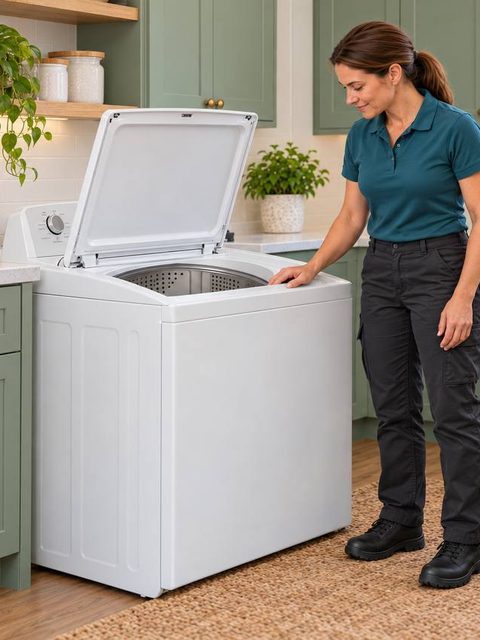
Traditional top-loaders with an agitator tend to smell less because their lids do not seal. High-efficiency top-loaders use little water and can build the same residue under the wash plate and around the rim. The habits carry over: small HE doses, a monthly clean cycle, and the lid left up between loads so the tub can dry.