Olympia · more repairs
Dishwasher repair in Olympia often starts with one of two sights: glasses turning cloudy on soft city water, or gray water left standing over the filter.
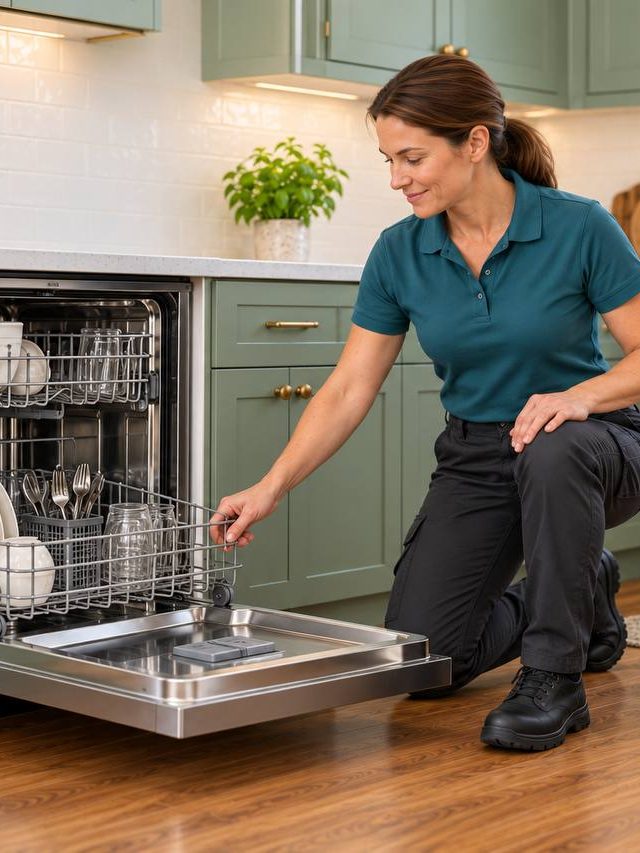
Olympia’s houses are older than their neighbors in Lacey and Tumwater. The median home dates to about 1982, nearly half went up before 1980, and roughly one in nine predates 1940, so plenty of dishwashers sit in kitchens never framed for one. We find them wedged into converted base cabinets, sharing a sink drain with a disposal, and wired to circuits planned long before a heater and a drain pump drew power together. The water comes mainly from the McAllister Wellfield and is soft, about 50 to 60 milligrams per liter: little scale on elements, but detergent stretches much further than the box assumes, so full doses leave residue, suds and eventually etched glass. Fall and winter windstorms that cut PSE power add one more strain, since restoration surges can leave a control unresponsive.
Picture a Northeast Olympia bungalow the week before Thanksgiving. The dishwasher hums through its cycle, then leaves an inch of cloudy water in the tub, and the owner has already rinsed the filter without luck. On a call like this our technician starts with a drain test, listening for the pump motor and watching whether any water moves. In older Olympia kitchens the fault often sits outside the machine: a drain hose kinked when the unit was slid into a narrow opening, a high loop that sagged onto the cabinet floor, or a sink air gap packed with debris. If that path is clear, we pull the pump, check the impeller for glass chips and meter the windings. Then we name the worn-out part and jot its repair cost on a written quote, all before a single piece is swapped.
Kitchens in the historic district have often been remodeled more than once, and the dishwasher usually lives in space borrowed from a pantry or an old cabinet run. We regularly find supply lines stretched tight, units never anchored to the countertop and circuits shared with other kitchen loads, and we check all three before blaming the machine itself.
Bungalow kitchens here are compact, so dishwashers tend to be narrow models or full-size units squeezed beside the sink. Door springs and cables take extra strain when the door swings against a nearby cabinet, and a slow leak can travel under old flooring for weeks. We test the door balance, the tub gasket and the floor beneath.
Westside ramblers often run their plumbing through a crawlspace, which puts dishwasher supply and drain lines within easy reach but leaves them exposed to cold air on freezing nights. Remodels here and in Goldcrest often paired a newer Bosch or KitchenAid with an older shutoff valve, and a seeping or seized valve is something we point out on the visit.
Condos near Percival Landing often hold 18-inch dishwashers or European-style units whose small filters clog quickly when plates go in unrinsed. Their drain lines tie into shared building plumbing, so a slow drain can belong to the building rather than the pump. We test the dishwasher’s own drain first, which shows whether the fault is yours or the building’s.
Cloudiness that won’t wipe off is usually etching, which happens when soft water meets a full detergent dose, and heavy foam at the door often comes along with it. The glass itself can’t be restored, so we check the water temperature, the dispenser and the rinse-aid setting, then help you settle on a smaller dose.
A puddle left behind when the cycle finishes sends us to the drain path. Older Olympia kitchens often hide a hose pinched behind the cabinet, a drooping drain loop or an air gap packed with food bits; once those check out, we meter the pump and inspect its impeller for glass.
In older Olympia homes a dishwasher leak often shows up downstairs first, as a stain on the basement joists or a drip onto stored boxes. We trace it to the inlet valve, the door gasket, a loose drain clamp or a cracked tub seam, and test each one before recommending a part.
In a long single-story house the water heater can sit at the far end from the kitchen, so the first fill arrives cool and greasy dishes come out filmed. We meter the heating element and thermistor, confirm the fill temperature, and suggest running the kitchen tap hot before you start a cycle.
If the panel stays dark after PSE power returns, we check the door latch switch, the thermal fuse and the supply at the junction box. Older Olympia circuits and shared breakers get tested too, so a tired circuit isn’t mistaken for a failed control board, which is always the last part we suspect.
Ask for a visit by phone or with the online form, and our scheduling desk will set an arrival window for your Olympia address. Our technician starts by listening: when the trouble began, which detergent you use, whether the kitchen has been remodeled. Then come the tests, a water-fill check, a drain test and meter readings on the pump, heater and door switch. We describe the worn part in everyday language and write out one price for the fix. Our visit carries a $99 charge. If the repair gets your yes, that charge is folded into its total; if not, nothing is added beyond it. Most dishwasher parts ride on our vans; an ordered one gets installed on a return stop with no trip fee added.
With the dishwasher off, lift out and rinse the filter every couple of weeks. On Olympia’s soft water, switch from pods to a powder or gel you can measure, start near half the suggested dose, and keep the rinse-aid dispenser full so glasses stay clear.
When the dishwasher in your Olympia kitchen quits mid-cycle, ask for a visit and we will bring the tests, the parts and a care note. Approving the work tucks the $99 into the repair price; turning it down means the visit was the entire expense.
Request serviceWater from Olympia’s taps carries very little hardness, so detergent acts far stronger than the box expects, and a hard-water dose leaves film and, over months, etches the glass. To tell which you have, leave one cloudy glass in white vinegar for a while: film dissolves, while etching stays for good. We check the dispenser and water temperature, then suggest a smaller dose and steady rinse aid.
Repair usually makes sense when the tub and frame are sound and the failed part is one we can name, such as a pump, fill valve or door switch. In compact Olympia kitchens a replacement can also mean cabinet work, because older openings are not always a standard size. When a rusted tub, a cracked frame or repeated control failures make repair a poor bet, we tell you so and let you decide.
We do. Our technicians repair 18-inch and full-size models from Bosch, Whirlpool, GE, KitchenAid, Frigidaire, LG, Samsung, Maytag and Electrolux, among others. For condos near Percival Landing, we ask how to get in and where to park when we set the arrival window. If a slow drain turns out to be the shared building line rather than the dishwasher, we show you where the fault sits so the association knows where to look.
It can be either. Older kitchen circuits sometimes feed a dishwasher together with a disposal or countertop outlets, and a heating element on top of those loads is a lot to ask. We meter the supply first, then test the element, wiring and motor for a short. If the dishwasher tests sound and the circuit is the issue, we say so, and the house wiring goes to a licensed electrician.
Check the maker’s warranty first. While that coverage lasts, lean on it; our team would give you that same advice on the phone. Our company is independent and has no tie to any appliance maker. Once that coverage ends, our team works on the same brands, names the failed part plainly and puts the warranty for our repair in writing on the invoice. Keep the previous owner’s manual and receipts if you can.
One $99 visit to track down the fault, then a quote on paper. Go ahead with it and those $99 are tucked inside the total.