Olympia · more repairs
An empty ice bin in Olympia rarely means a big repair.
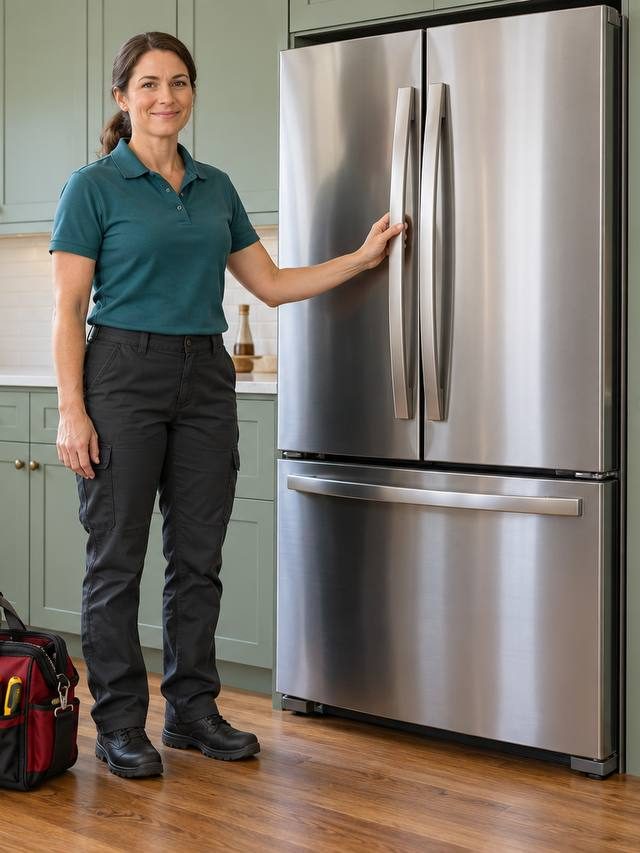
Ice makers are among the quicker jobs on our Olympia route. The McAllister Wellfield sends out soft water, measuring just 50 to 60 milligrams per liter, which leaves hardly any scale in a fill valve, so the usual faults are mechanical and seasonal rather than mineral. Refrigerators pushed into snug alcoves in older kitchens run warm at the back, and doors opened often in air near 80 percent humidity add frost that can freeze the fill tube solid. Windstorm outages that cut PSE power turn half-made cubes into one solid slab that stalls the ejector. Homes on private wells, including some on the county’s rural edge, can send iron sediment into the inlet screen, which calls for a new valve. Most of these are settled in a single visit.
Picture a downtown condo near Percival Landing where the ice maker stopped a few days after a new water filter went in. The bin is empty, the dispenser pours water slowly, and the owner hears a hum from the back of the refrigerator every so often. Our technician listens, then checks whether water is reaching the ice maker at all. The usual findings: a filter not fully seated or the wrong model, a fill tube frozen where it enters the freezer, or a fill valve whose solenoid tests open on the meter. We reseat or swap the filter, thaw and clear the tube, or replace the valve, then force a harvest cycle to prove the fill and ejection work before we pack up.
Older Eastside kitchens sometimes feed the refrigerator from a thin copper or plastic line tapped into a sink supply years ago. Those lines kink when the refrigerator is pushed back, and old self-piercing valves clog or seep. We check flow at the line, the inlet screen and the fill valve, and point out a supply that needs upgrading.
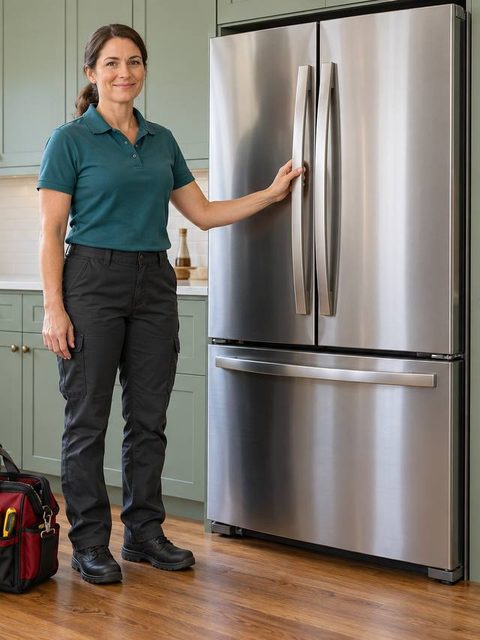
Remodeled rambler kitchens on the Westside and in Goldcrest often hold a French-door refrigerator whose ice maker sits up in a fresh-food door. Those door units rely on a small fan and a sealed ice compartment, and a tired seal lets in warm air that causes frost and clumped ice. We check the compartment seal, the fan and the module.
Where a private well supplies a Boston Harbor home, iron and manganese sediment can collect in the refrigerator’s inlet screen and fill valve, and water filters clog sooner. After windstorm outages on the rural edge, melted cubes can refreeze into a jammed block. We clear the bin, replace the valve or screen, and fit a new filter.
Condo refrigerators near Percival Landing are often counter-depth models with compact ice makers tucked into the freezer door or a corner. If building water pressure runs low, the fill slows and cubes shrink. We measure fill volume, check the filter and valve, and confirm the module fills the tray fully before we leave the unit.
A new filter that isn’t fully locked in, or one made for a different model, can stop water to the ice maker. We reseat it, check flow at the dispenser and meter the fill valve. This is one of the quickest fixes we make, and often nothing more than the filter is needed.
Moist air through a door left ajar, or a valve that keeps weeping after each fill, can freeze the tube where water enters the freezer. We thaw and clear it, find out why it froze, and replace a leaking valve or a worn door gasket so the tube stays open.
When power drops, cubes melt in the tray and bin and refreeze into a solid block that stalls the ejector or the dispenser auger. We clear the bin, test the ice maker module and auger motor, and reset the ice maker so it cycles and drops cubes again.
Small or hollow cubes mean the tray isn’t filling fully. Long supply runs through a crawlspace, a kinked line or a clogged filter all cut flow. We measure the fill, check pressure at the valve and replace the filter or the valve so full-size cubes come back.
If your home draws from a private well rather than Olympia city water, iron can tint cubes and clog the inlet screen. We replace the screen or fill valve, fit a new filter and suggest changing it more often, then run the dispenser until the water pours clear.
Most Olympia ice maker calls are finished in a single visit. Once you reach us by phone or through our website form, the scheduling desk books an arrival window; send a picture of the model label inside the refrigerator and we can load the right parts. The technician listens to what changed, then checks water flow at the line, meters the fill valve, looks for ice in the fill tube, and tests the module and dispenser parts. You get the part named and a written price. The visit costs $99. Say go, and that amount is built into the repair price; say stop, and the bill ends at $99. Valves, modules and filters are usually on our vans; a test harvest and a care note finish the job.
Change the refrigerator’s water filter on the schedule in your manual, and write the date on the housing. On Olympia’s soft water, filters rarely scale up, but an old one still slows the fill and shrinks cubes. After an outage, empty the bin and toss the first batch.
An empty ice bin in your Olympia kitchen is usually a short job for our team, not a big repair. Approve the work and we count the $99 within its price; decline and the $99 settles the visit.
Request serviceUsually, yes. Mineral scale is rare on Olympia city water, so most of what we find is mechanical: a frozen fill tube, a failed valve solenoid, a worn module, a clogged filter or a sticking dispenser door. Those parts usually ride on our vans, so most ice maker repairs are finished in one visit, with a test harvest before we leave. The price is in your hands, in writing, before we start.
Often it didn’t. During an outage, cubes thaw and fuse into one lump that jams the ejector or auger, and the ice maker simply stops. Empty the bin, let the ice maker run for a day, and see whether it restarts. If it doesn’t, the surge may have finished off a weak module or valve, and our technicians test both. The late-September storm struck hardest south of the city, yet a short blackout in town can do the same.
Yes. Door-mounted ice makers are common on French-door models from Whirlpool, KitchenAid, Maytag, GE, GE Profile, Café, LG, Frigidaire, Electrolux, Kenmore and Amana. They depend on a small fan, a sealed compartment and a module, so we test all three along with the fill valve. We have no link to any manufacturer, so a maker’s warranty that still applies should be your first call.
Private wells in the unincorporated county sometimes hold iron and manganese, which tint ice, leave a metallic taste and clog the small screen where water enters the refrigerator. A fresh filter often helps right away. If flow is still weak, we replace the screen or valve. Treating the well water itself is a job for someone who handles water treatment, and it protects every appliance in the house.
Since water reaches the door, the supply line and part of the fill valve are working. The usual suspects are a frozen fill tube, the ice maker’s side of the valve, the module itself, or the dispenser auger motor and door flap. We check each in turn, starting with the simplest. Most of these are routine repairs finished in the same visit, with a written price before work.
One $99 visit to track down the fault, then a quote on paper. Go ahead with it and those $99 are tucked inside the total.