Tumwater · more repairs
A Tumwater oven that clicks but never lights, or a coil burner that glows in one spot only, is usually one worn part away from cooking again.
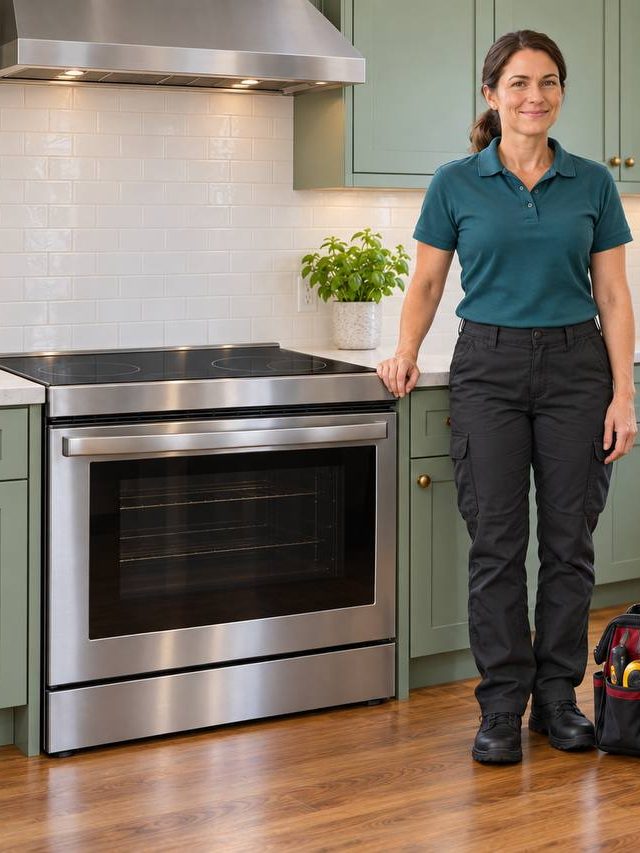
Tumwater kitchens split between fuels. PSE natural gas serves parts of the city, and somewhere around 35 to 44 percent of local households heat mostly with it, so gas ranges are common; out on the rural edge, propane tanks feed ranges and cooktops instead. Electric coil, smooth-top and induction models show up across the rest, from 1990s kitchens to the newer builds that make up about 40 percent of the housing. Every type has its own weak spot. Gas ovens wear out igniters, electric ovens lose bake and broil elements, glass tops crack or lose a radiant element, and induction boards dislike surges. The late-September windstorm that hit south Thurston County hardest brought its share of those, and the first big bake after the lights come back is when a tired part tends to quit.
Guests are due at six, the roast is waiting on the counter, and the gas oven in a Tumwater Valley kitchen glows orange through its floor vents without ever lighting. That glow comes from the igniter. As one ages it still gets hot, yet it stops pulling the amperage the safety valve waits for before it opens. Amperage through the igniter is the first reading our technician takes; then come the gas valve, the temperature sensor and a manometer on the supply line. If the range runs on propane, we confirm it carries the right orifices for that fuel. Burners lighting fine on top show the gas supply is healthy. Most visits like this end with a new igniter from the van, a test bake checked by thermometer and a care note about keeping spills off the oven floor.
Bush Prairie mixes 1990s subdivisions with recent builds near the Olympia Regional Airport, and both smooth-top electric and gas ranges are common there. We see cracked glass tops, radiant elements that stay dark and bake elements with a bright blister. We meter each element and test the switch or control that feeds it.
Newer Tumwater Valley kitchens bring slide-in ranges, wall ovens paired with cooktops and some induction. Induction boards and wall-oven controls dislike surges, and the late-September outage tested plenty of them. We check cooling fans, sensors and the power supply before any board work, which stays with our technicians from start to finish.
Lake-edge kitchens see damp air most of the fall and winter, and moisture plus boilovers crust burner ports and spark electrodes until burners click without lighting. Where a home cooks on propane instead of natural gas, we confirm the conversion too. On electric ranges we meter coil elements and their receptacles.
Older houses near the falls, in the part of town platted in 1845 as New Market, often gained remodeled kitchens with a wall oven and separate cooktop. Wall ovens run warm inside cabinetry, so we check the cooling fan, door hinges and gasket along with the bake and broil elements or the gas igniter.
Tall, yellow or sooty burner flames on the rural edge often mean the range was never converted for propane, or the orifices are wrong. We confirm the orifices, read pressure with a manometer and adjust the air shutters. Any gas-side adjustment always stays with our technicians.
Food that takes far longer than the recipe says points to a weak bake element, a drifting oven sensor or heat slipping out past a flattened door gasket. We check the oven against a thermometer, meter the element and sensor, and look at the gasket and hinges before naming the part.
When one radiant or coil element stays dark after power returns, we meter the element, its infinite switch and the wiring terminals. Surges from the late-September windstorm can finish off a tired switch. Cracked glass means a new top, which we price in writing before any work.
An induction cooktop that beeps, shows nothing or shuts off mid-boil may have a blocked cooling fan, a failed temperature sensor or a damaged power board. We clean the fan path, test the inputs and check pan compatibility. Board-level work stays with our technicians, never the homeowner.
A wall oven that overshoots its setting, shuts itself off mid-bake or warms the cabinet face often has a failed cooling fan, a drifting sensor or a gasket leaking heat. We check the fan, meter the sensor against a thermometer and test the high-limit safety, which is never bypassed.
Call or fill in the online form, and our scheduling desk will confirm an arrival window for your Tumwater kitchen. Let us know whether the range runs on natural gas, propane, electricity or induction. Our technician listens, then tests: igniter current, element resistance, sensor readings, oven temperature against a thermometer and gas pressure with a manometer. Then you learn which part failed, in everyday terms, along with one price on paper. Approving the work merges the $99 visit into that price; declining it makes the $99 the full charge, and our findings stay with you. Igniters and elements usually travel on the van, ordered parts get fitted later with no second trip charge, and the written warranty and care note come with the invoice.
Once gas burners are off and cool, lift the caps and wipe boilovers from the ports with a soft brush and dry cloth, and never line the oven floor with foil. In damp Tumwater winters, crusted ports light unevenly and keep the spark clicking.
Whether your Tumwater range burns natural gas or propane or runs on electricity, our team will find what failed and leave a care note that helps it keep cooking. Approve the work and your $99 is already inside the price; pass, and the visit costs exactly $99.
Request serviceYes. A propane range is built on the same igniters, valves and spark modules as a natural gas model; what changes is the orifice size and the pressure the regulator delivers. Our technicians confirm the conversion was done, check the regulator’s output with a manometer and light every burner plus the oven to test them. Lines, valves and burners stay with our team; your part is keeping the ports clean and noticing when flame color changes.
Usually. On an electric range, set the clock and run a short bake; on gas, confirm the burners and oven light normally and the flames burn blue. Any smell of gas means everyone steps outside first, and the call to the gas utility is made from there. If an element stays dark, the display is scrambled or the oven will not hold temperature, switch off the breaker and let our technicians test it.
Yes, including wall ovens fitted into older cabinetry during remodels. We slide the oven forward with care, check the cooling fan, hinges and door gasket, and test the elements or igniter along with the sensor. Some wall-oven controls suffer from heat trapped in a tight cabinet, so we look at ventilation space too before naming a part and writing a price.
Yes. Ranges, cooktops and wall ovens from Samsung, GE, GE Profile, Café, Bosch, Maytag, Amana, Kenmore, Electrolux, KitchenAid, Whirlpool, LG, Frigidaire and Frigidaire Gallery are all work we take on. We are an independent company with no maker affiliation. A range still inside its manufacturer’s coverage period should go through that warranty first; when we notice a recent purchase date, we will say so before any work.
Until someone looks at it, cut power to the range at the breaker and keep pans off that surface. A cracked top on an otherwise healthy range is a common repair, with the glass replaced as one piece. If the oven also has a failing control, worn elements and a sagging door, replacement may make more sense. We lay out the reasoning with one written price, and the choice stays with you.
One $99 visit to track down the fault, then a quote on paper. Go ahead with it and those $99 are tucked inside the total.