Tumwater · more repairs
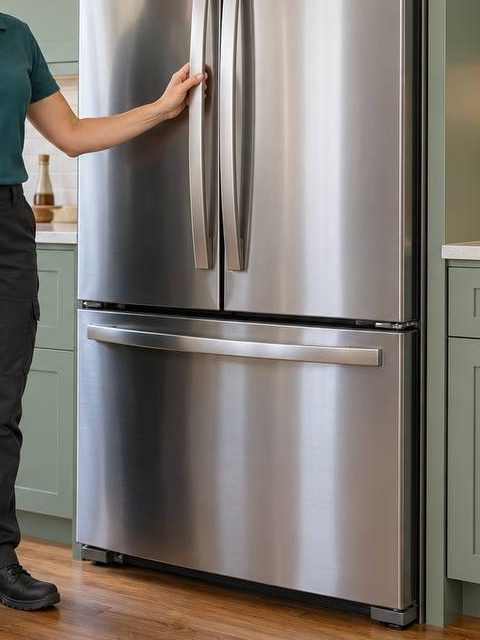
A warm Tumwater refrigerator moves up our scheduling desk’s list, and we try to reach it the same day when the route has an opening.
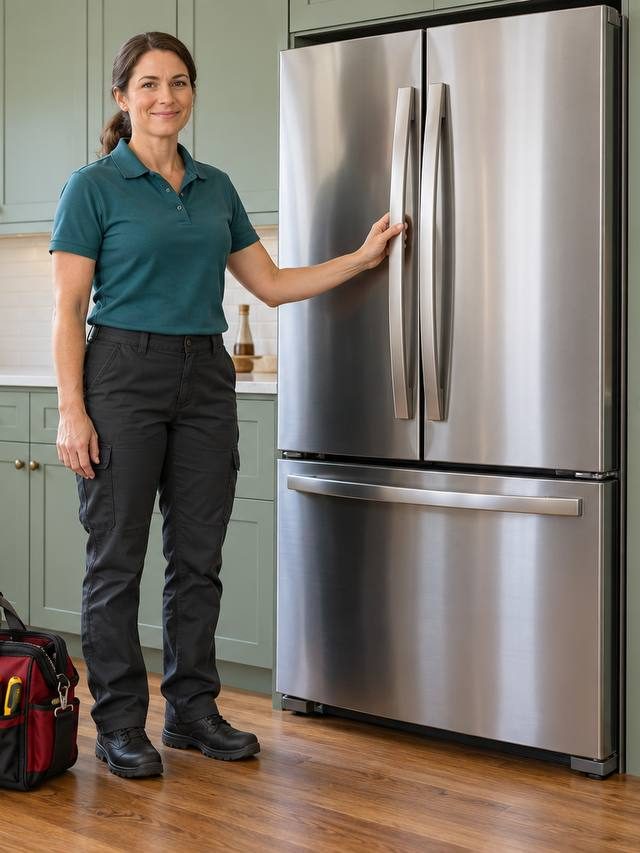
Tumwater’s typical house dates to the mid-1990s, with roughly four in ten built since 2000, and many households here give garage space to a spare refrigerator or a chest freezer stocked with salmon, berries and bulk groceries. That garage unit works hardest. On some of the roughly 78 nights a year that dip below freezing, a cold garage keeps the fresh-food thermostat of a single-control model content, and with the compressor idling for hours, the freezer side goes soft. Most summers stay mild, but in June 2021 the Olympia airport, next door to Bush Prairie, logged 110°F, and condensers furred with dust had nowhere to shed that heat. A refrigerator lives on electricity whatever the range burns, so outages matter most; the late-September storm fell heaviest on south Thurston County, and long restarts expose tired start relays and frost-packed evaporators.
A typical after-storm call from Bush Prairie: the lights came back, the refrigerator hummed to life, and two days later the milk read in the upper 40s while the ice cream slumped. Spoiling food bumps a call like that ahead on our scheduling desk’s board, aiming for a visit before day’s end. Our technician parks a thermometer in each compartment, listens for the evaporator fan and pulls the rear freezer panel to see the coil. Solid frost there says defrost has stopped, so three parts get metered in turn: the heater, its bimetal thermostat, then whichever timer or board commands the cycle. A clear coil sends us to the machine compartment instead, to check the start relay, the condenser fan and the compressor’s current. Only our technicians touch refrigerant or the sealed system.
Subdivisions around the Olympia Regional Airport run from the 1990s to recent builds, and we see plenty of French-door and bottom-freezer models there. Those designs lean on evaporator fans and timed defrost, so frost on the back freezer panel is a frequent find. We also clean condenser coils that pull dust from busy garages and open living spaces.
Rural homes along Littlerock Road often keep a chest freezer or second refrigerator in a shop or garage, and the late-September windstorm hit this south-county stretch hard. Long outages thaw those units, and restarts reveal weak parts. We check the thermostat, gasket, defrost parts and start relay, and look at what the cord is plugged into.
In newer Tumwater Valley kitchens we often meet counter-depth and French-door refrigerators with slim, fan-cooled compartments. A crowded shelf that blocks the air vents can warm one drawer while the rest stays cold. We check airflow, the damper and the evaporator fan before suspecting anything bigger, and show you which vents to keep clear of groceries.
Lake-edge homes sit in fall and winter fog, and humidity near 80 percent works on door gaskets and defrost drains. A torn gasket lets moist air in, frost builds fast and the fresh-food side sweats. We test the seal with a paper strip, flush the defrost drain and meter the heater that keeps it open.
A refrigerator that restarted after the late-September windstorm but never got properly cold may have a failed start relay, a stuck defrost control or a fan that seized while it sat still. We take temperatures in both compartments, meter the relay and fans, and listen to the compressor start.
A refrigerator-freezer in a cold garage can let its freezer soften, because the thermostat sits in a fresh-food section that stays cold on its own. We check the thermostat and the model’s rated room range, and tell you whether a warmer spot, a garage-rated unit or a dedicated freezer suits it.
Frost across the back freezer panel means the defrost cycle stopped, and in damp fall weather a torn gasket speeds it along. Each defrost part gets its own meter reading, heater and thermostat first and the control after; we replace whichever failed and melt the frost so the evaporator fan can move air again.
Water pooling beneath the crisper drawers usually traces to a frozen defrost drain or a cracked drain trough. Warm water clears the ice from the drain line, then we test the small heater or metal strap meant to keep it open and look over the door gasket that let extra moisture in.
A click, a short hum, then silence, every few minutes, usually means the compressor cannot start; the start relay or overload has quit, often because a dusty condenser let it overheat. We meter the relay, look at the condenser fan and coil, and if the compressor itself has given out, we tell you directly.
Call or use the online form and tell us the refrigerator is warm; our scheduling desk will try to fit your Tumwater home into that day’s route. Our technician asks whether an outage came first, then takes thermometer readings, checks the evaporator and meters fans, relays and defrost parts. Once the culprit turns up, you learn its name and see the cost in writing as one figure. Agree to the repair and your $99 visit fee is counted toward that figure; leave it and the $99 covers the diagnosis alone. Fans, relays and heaters are usually aboard, and an ordered part is fitted on a second stop with no trip charge of its own. We finish by writing the warranty on the invoice and leaving a care note.
Twice a year, unplug the refrigerator, pull the base grille and vacuum the condenser coil and fan blades. Tumwater garages and laundry areas shed dust quickly, and a clean coil keeps the compressor cooler through heat spells and the restarts that follow long outages.
If a Tumwater refrigerator or freezer is running warm, reach out and our team will look for the earliest slot the day allows. Give the repair a yes and your $99 diagnosis becomes a piece of its cost; turn it away and you settle only that $99.
Request serviceGive the refrigerator a full day to pull back down. Set an appliance thermometer on a middle shelf; fresh food should settle near 37°F and the freezer near 0°F. If it stays warm, listen for the fans and look for frost building on the freezer’s back wall. Discard food that sat warm too long. If it never recovers, call us, and a refrigerator that will not hold cold moves near the front of our line.
Some sweat on the cabinet edges is normal when humidity sits near 80 percent, as it often does here in fall and winter. Heavy beads along the door seam, though, point to a worn gasket or a failed anti-sweat heater along the center flap of French-door models. We test the gasket with a paper strip, meter the heater and check door alignment and hinges so the doors meet square.
Yes, provided it is a home refrigerator or freezer on your own residential property. Upright and chest freezers in shops and outbuildings along Littlerock Road put up with cold floors, dust and long outages. We check the gasket, thermostat and condenser, plus the defrost parts on upright models. Commercial reach-ins, walk-ins and display coolers fall outside our work, and our scheduling desk mentions that when you first call.
Our technicians work on refrigerators and freezers from Frigidaire and Frigidaire Gallery, KitchenAid, Amana, Maytag, Whirlpool, Kenmore, Bosch, Electrolux, LG and GE, including its Profile and Café lines, with the freezer on top, on the bottom, off to one side or below French doors. We are an independent company, not tied to any maker. If your refrigerator is still under the manufacturer’s warranty, use that coverage first; we will point it out if we spot a recent date.
Often, if the sealed system is healthy. A new fan, relay, gasket, thermostat or defrost heater is routine work and can buy years of steady cooling. On an older unit with a dead compressor or a leaking sealed system, a cracked liner, or several major parts failing together, replacing it usually makes more sense. We lay out that reasoning with one written price and leave the choice with you.
One $99 visit to track down the fault, then a quote on paper. Go ahead with it and those $99 are tucked inside the total.