What the cycle does to a range
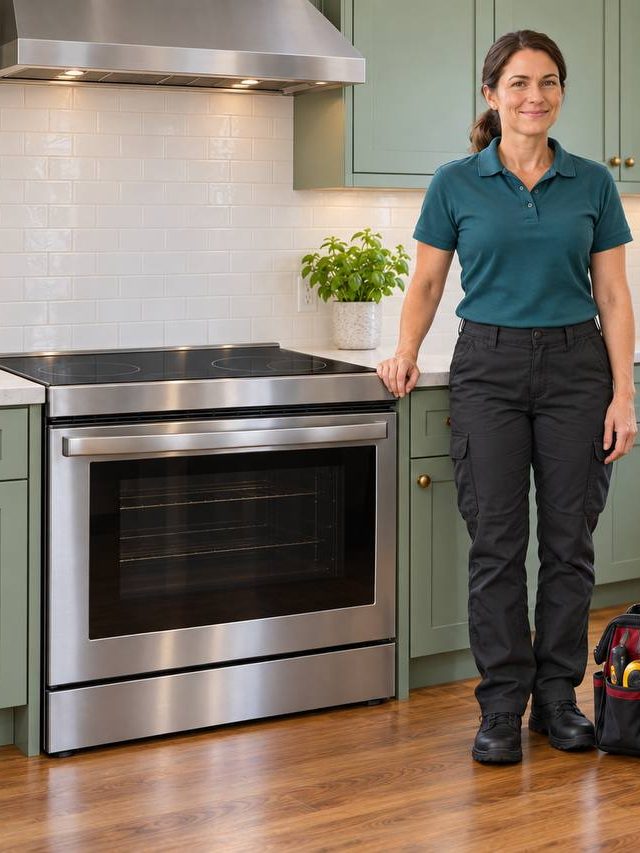
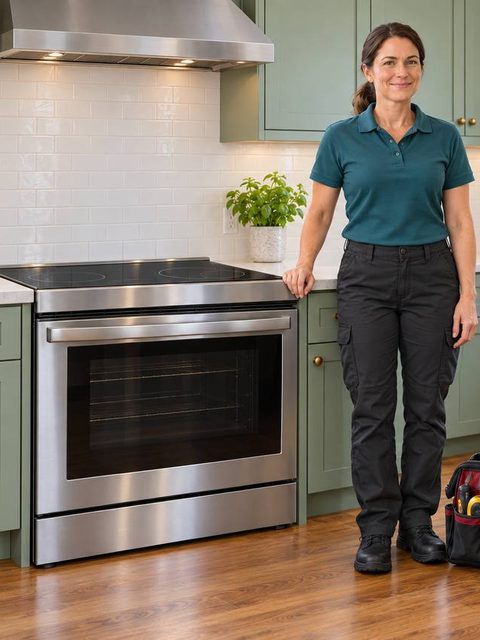
Self-clean locks the door and heats the empty oven far past baking temperature, roughly 800 to 900°F, until grease and spills turn to pale ash. The insulation, door gasket, wiring and control are designed for it, but each cycle is a hard test for parts that have already aged. That matters in this area. Olympia’s housing runs old for the region, with nearly half of it standing before 1980, and kitchens there and in Lacey’s 1960s neighborhoods, Tanglewilde and Thompson Place, may keep a range in service for many years. Gas furnaces warm something like 35 to 44 percent of homes in the three cities, so gas ovens are common too, and their igniters and valves face the same heat.
The call we get most often after a self-clean cycle is an oven that stays dark, or a door that will not unlock once it cools. Extreme heat can blow the thermal fuse that protects the range from overheating, cook a relay on the electronic control, or jam the motorized door lock partway through its travel. Electric ovens sometimes lose a bake element that was already thin, and gas ovens can lose an igniter that was already weak. None of this is the owner’s fault, but the timing stings. A range that fails two days before Thanksgiving leaves little room to order a control board and have it fitted before the turkey goes in.
A gentler way to clean the oven
- 01Start cold and cut power
Begin with a cold oven. Turn off the range’s breaker, or unplug an electric range if the outlet is easy to reach. Do not pull a gas range away from the wall to find its plug; switching off the breaker and the controls is enough. Take out the racks and set them aside.
- 02Spread a baking soda paste
Mix about half a cup of baking soda with enough water to make a spreadable paste. Coat the oven floor and walls with a gloved hand or a soft spatula, laying it on thicker over burned spots. Keep it off the heating element, the gas burner openings, the door gasket and the temperature sensor.
- 03Let it sit overnight
Close the door and leave the paste for at least twelve hours. It browns as it loosens baked grease, which is a good sign. Meanwhile, soak the racks in hot water with dish soap, in a tub lined with old towels, and scrub them with a non-scratch pad the next day.
- 04Wipe, scrape and spritz
Wipe the paste out with a damp cloth, using a plastic scraper on stubborn patches. Spray any white residue with plain white vinegar; it fizzes where it meets the soda and lifts the last film. Wipe again with clean water until the surfaces feel smooth and no powder remains.
- 05Treat the glass and gasket gently
Clean the inside of the door glass with the same paste and a soft cloth. Leave the woven or rubber door gasket alone apart from a light pat with a damp cloth, since scrubbing frays it and a frayed gasket leaks heat. Skip commercial oven cleaner inside a self-cleaning oven unless the manual allows it.
- 06Restore power and warm it briefly
Slide the racks back in, switch the breaker back on, and heat the empty oven to about 350°F for fifteen minutes to dry it and clear any vinegar smell. Crack a window or run the hood fan. Should a gas odor ever appear, get everyone outdoors before phoning the gas utility.
Supplies for hand cleaning
- Baking soda and a small bowl
- White vinegar in a spray bottle
- Rubber gloves and a plastic scraper
- Non-scratch scrub pads and soft cloths
- Old towels for soaking the racks
When the oven needs our technicians
If the door stays locked long after the oven has cooled, do not pry it or try to release the latch by hand; the lock is a safety device, and forcing it bends the mechanism or breaks the switch that reports its position. Call us for an oven that lost power during or after self-clean, a blank display, a blistered or split bake element, a gas burner whose igniter ticks or glows yet never catches, or a smell of scorched wiring. Our technicians test the thermal fuse, lock motor and switches, control, element and igniter with a meter, and check gas pressure with a manometer on gas models.
Holiday cooking in Lacey, Olympia and Tumwater
November is our wettest month and the start of holiday cooking, when kitchen windows stay shut and self-clean smoke lingers in the house. If you still want the cycle, run it two or three weeks before a big meal rather than the day before, and move pet birds well away, since the fumes can harm them. That leaves time for a repair if a part gives out. Our diagnostic visit is $99: go ahead with the repair and it becomes a piece of that price; stop at the diagnosis and nothing more lands on your bill. Either way, the written price comes first.
Clean by hand in the weeks before a holiday and save the high-heat cycle for a quiet month. If the oven has already gone dark or locked itself shut, our team will get it cooking again.
Request serviceQuestions on this care note
My range is getting on in years. Should I still use self-clean?
It can be, but an older range has parts that have been heating and cooling for years, and the cycle pushes them harder than anything else you do. If the oven has had odd shutoffs, a bake element slow to heat or a door that sticks, clean it by hand instead. If you do use self-clean, stay home and awake until it finishes and cools.
Why won’t my oven door unlock after self-clean?
The lock stays engaged until the oven drops below a safe temperature, which can take an hour or more after the cycle ends. If it is still locked once the oven is cool, the fault usually sits in the lock motor, the switch that reports the lock’s position, or the control. Do not force the handle. Our technician tests the lock circuit and replaces the failed part so the door opens and latches normally again.
Can I leave the racks in during the self-clean cycle?
Only if the manual says your racks are built for it. Standard chrome racks lose their shine, turn a dull blue-gray and stop sliding smoothly after that much heat, and some coated or gliding racks can be damaged outright. Taking them out and washing them in a tub takes a few minutes and keeps them working the way they should.
Is steam clean a good alternative to self-clean?
Steam clean runs at a much lower temperature and works well on light, recent spills, not years of baked grease. Pour the amount of water the manual calls for onto the oven floor, run the short cycle and wipe away the loosened soil. Because it avoids extreme heat, it spares the thermal fuse and door lock, which makes it a gentler choice before a holiday.