Lacey · more repairs
When the ice bin in a Lacey refrigerator stays empty, the cause is usually small: a clogged fill valve, a frozen fill tube, a tired ice maker module or a spent water filter.
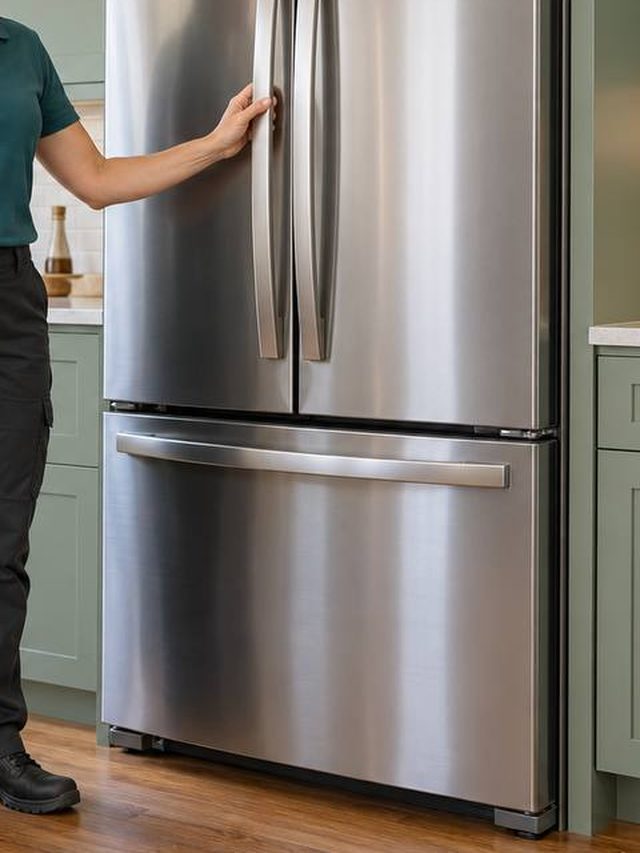
An ice maker lives on whatever water the house delivers, and in Lacey that means water from roughly 20 city wells, soft to moderately hard. A few of those wells carry more iron and manganese than looks good in a glass, and the sediment settles in the fill valve’s inlet screen and the thin line behind the refrigerator, shortening each fill until the cubes turn out undersized or hollow in the middle. Newer homes, which make up much of Lacey, often have a refrigerator with a door dispenser and a line plumbed through the wall; older kitchens may still feed the ice maker through a small saddle valve on a copper line. Power matters too: after a windstorm outage, half-melted cubes refreeze into a solid block, and water left in the fill tube can freeze shut.
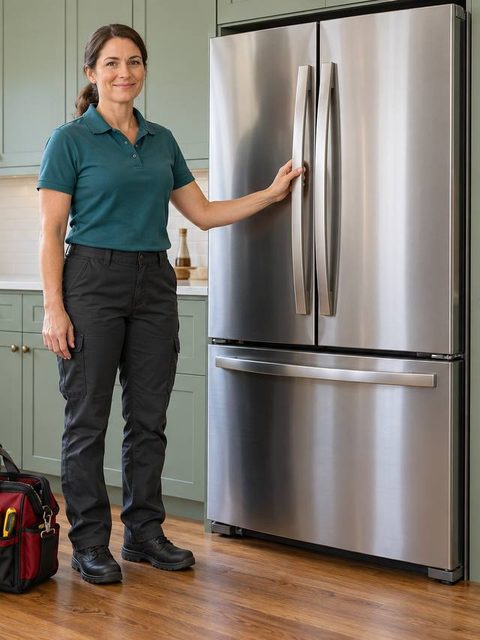
A common Lacey call: a French-door refrigerator in a Horizon Pointe kitchen stops making ice a week after the owner swaps the water filter, and the door dispenser only dribbles. We start simple. We reseat the filter and check that it is the right cartridge, then time a dispense into a measuring cup to judge how well water reaches the fill valve. If flow is weak, we shut off the supply, pull the valve’s inlet screen and look for rust-colored grit. If the ice maker gets water but still makes nothing, we check whether ice has plugged the fill tube, run the module through a test harvest, and read the ice compartment temperature. Most visits like this end with a cleared line or one new part, and the ice maker cycling again before we leave.
Hawks Prairie kitchens, with a median build year around 2009, often hold French-door refrigerators whose door carries its own ice maker, and a few add another ice maker down in the freezer drawer. Door units depend on tight gaskets and steady fan airflow, so slow or clumped ice there usually traces to a warm ice compartment, not a broken module.
Horizon Pointe’s newer kitchens often run the refrigerator water line through the wall to a recessed box behind the unit. When a refrigerator is rolled out for cleaning, that line can kink or the connection can loosen, and the ice maker quietly stops. We check the line, the shutoff in the box and the fill valve before anything else.
In Jubilee’s 55-plus homes, a household may use less ice than the ice maker makes, so cubes sit for weeks, shrink and fuse into a clump that jams the auger. We break up the block, check the auger motor and door flap, and suggest dumping the bin now and then or switching the ice maker off between visitors.
Thompson Place kitchens from the 1960s were rarely plumbed for refrigerator water, so the ice maker line was added later, often as thin copper or plastic tubing tapped into the sink supply with a saddle valve. Those valves clog and seep with age. We check flow at the refrigerator and trace the line back before blaming the ice maker.
In the parts of Lacey fed by iron-bearing wells, sediment builds in the fill valve screen, and each fill comes up short. The ice maker keeps cycling but makes thin, hollow cubes. We clean out the valve, or replace it if the seat is scored, and check the filter for rust-colored loading.
An outage can interrupt the ice maker mid-fill, leaving water in the fill tube that freezes solid once Puget Sound Energy restores power, so the next cycles run dry. We thaw the tube, check the fill valve for a slow drip that would refreeze it, and confirm the compartment temperature.
An ice maker on a garage refrigerator in Lacey can quit on freezing nights when the supply line crossing the garage wall freezes, or when a cold garage keeps the compressor idle and the freezer drifts warm. We check the line route, the fill valve and compartment temperatures, and suggest insulating the run.
When grit from iron-bearing water lodges in the fill valve seat, the valve can seep after it shuts, and water freezes into a sheet over the cubes or down the freezer wall. We test the valve’s shutoff, replace it if it seeps, and check the fill tube and module alignment.
In a newly built or newly bought Lacey home, the ice maker often sits idle because the supply valve behind the refrigerator was never opened, the arm or switch is off, or the first filter still holds air. We check each, flush the line and, once water flows, confirm the module cycles.
Ice maker repair in Lacey is usually one of our shorter visits. Book by phone or through the online form; our scheduling desk confirms an arrival window and may ask for the model sticker so likely parts come along. The technician hears what changed, then checks the filter, the pressure reaching the fill valve, the fill tube, the module and the ice compartment temperature. You hear the cause in plain words and see one written price. Accept it and the $99 counts as the first share of that price; decline and the bill ends at $99. Fill valves, modules and filters usually ride with us. We finish by watching a fill and harvest, and leave a warranty on the invoice and a care note on filters and the bin.
Change the refrigerator water filter on schedule, sooner if your Lacey water stains orange or the dispenser slows, and run a few glasses through a new one to clear air. Every month or two, empty the ice bin so old cubes do not fuse into a block.
When the ice bin in your Lacey refrigerator stays empty, request a visit; it is usually a short one, and we leave the ice maker cycling and a care note on filters.
Request serviceMost are among our shortest visits. Once the technician has tested the water supply, fill valve, fill tube and module, the fix is often a thawed line, a cleaned screen, a reseated filter or a single replacement part carried on our vans. New ice takes several hours to build up after we leave, so give the bin a day. For the rare part that has to be ordered, installing it later costs no extra trip charge.
Usually not from the ice maker itself. Lacey draws its water from roughly 20 wells, and a handful deliver enough iron and manganese to tint ice and leave grit in the fill valve screen. A fresh refrigerator water filter often helps, and we clean or replace the valve if sediment has reached it. If the tint persists, we suggest asking the city about your water, since the source is upstream of the refrigerator.
Yes. We work on in-door ice makers, freezer-drawer ice makers and the traditional kind in the freezer compartment, in refrigerators from KitchenAid, Whirlpool, Maytag, Frigidaire, Frigidaire Gallery, GE Profile, GE, Café, LG, Bosch, Electrolux, Amana and Kenmore. We are independent and have no tie to any manufacturer. If your refrigerator is recent enough that its maker’s warranty still covers the ice maker, use that first. Most repairs take one part or none.
Often, yes. Unplug the refrigerator first. Then hold a cloth soaked in warm water against the tube where it enters the ice maker, or ease a little warm water into it with a turkey baster, until the plug melts; towel up the drips. Never chip at it with a knife or pick. If the tube freezes again within a few days, the fill valve may be seeping, and that is a quick repair for our technicians.
Only the $99; nothing further gets billed. Our technician still tells you what stopped the ice, whether a filter, a frozen tube, a valve or the module, so you can decide later with full information. When you approve instead, your invoice shows only the written repair price, because the $99 visit is already priced into that figure. Since most ice maker fixes are small, many are finished the same visit.
One $99 visit to track down the fault, then a quote on paper. Go ahead with it and those $99 are tucked inside the total.