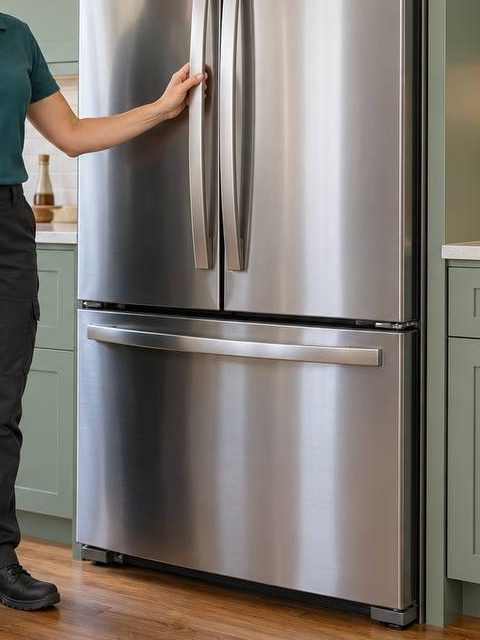
Why coils and gaskets decide how hard it works
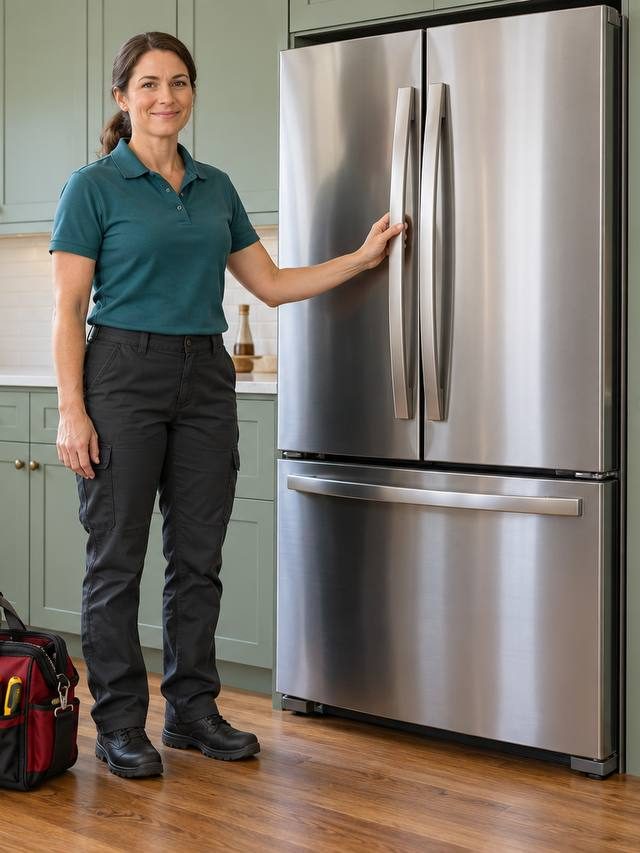
A refrigerator pulls heat out of the food compartments and sheds it through the condenser coil, usually behind the bottom grille or across the back. Dust, pet hair and garage grit wrap that coil like a sweater, so the compressor runs longer to shed the same heat. The door gasket does the other half of the job by keeping room air out. Around Lacey, Olympia and Tumwater, humidity near 80 percent means a weak seal lets in moisture that frosts the evaporator and beads on the shelves. Garage freezers see more dust and wider temperature swings, and a stretch like the June 2021 heat wave, when the Olympia airport logged 110°F, is exactly when a dusty coil loses ground.
Skip the coils for a few years and the repairs tend to arrive in a familiar order. The condenser fan motor wears out from pulling air through a matted coil, then the compressor start relay overheats from constant cycling. A torn or flattened gasket lets moisture in, and the frost it creates can smother the evaporator fan or overwhelm the defrost heater, so the freezer holds temperature while the fresh-food side warms. Water from that frost can freeze in the defrost drain and spill under the crisper drawers. We change fans, relays, gaskets and defrost parts regularly; a failed compressor or refrigerant leak is sealed-system work and a bigger decision.
Coil and gasket care, step by step
- 01Unplug and pop off the grille
Cut power first, either at the wall plug or at the breaker. Food stays cold for the short time this takes if the doors stay shut. Pull the toe grille off the bottom front, since most snap or lift out, and lay a towel down because the drain pan sits nearby on many models.
- 02Brush and vacuum the condenser coil
Slide a long, narrow coil brush between the coil rows and draw the dust toward you, then vacuum it up with a crevice tool. If your coil is on the back, roll the refrigerator out slowly, protecting the floor and the water line. Do not bend the thin fins or tubing.
- 03Vacuum around the condenser fan
On many bottom-coil models a small fan sits beside the compressor at the back. With the power still off, vacuum the lint you can reach around it without removing any covers. Leave the compressor, its wiring and the copper tubing alone; those belong to our technicians.
- 04Wash the door gaskets
Wipe each gasket with a soft cloth wrung out in warm, soapy water, opening the folds with your fingers where crumbs and sticky spills collect. Rinse with a damp cloth and dry it. Avoid bleach, solvents and sharp tools, which harden or split the rubber and weaken the seal.
- 05Test the seal with paper
Shut a slip of paper in the door at several spots around the frame, hinge side and corners included, and give each one a tug. Firm drag means a good seal; paper that slides out easily marks a gap. A hair dryer on low can warm a wavy spot so the gasket relaxes back into shape.
- 06Check level and temperatures
Restore power. Doors should swing shut on their own from halfway open; if they drift, raise the front leveling legs or rollers a turn or two. A day later, stand an appliance thermometer in a cup of water at mid-shelf height; about 37°F is the target, with the freezer near 0°F.
Gather these first
- A long, narrow refrigerator coil brush
- A vacuum with a crevice attachment
- Warm water, dish soap and soft cloths
- A strip of paper for the seal test
- An appliance thermometer
- A flashlight for the space under the grille
Leave these to our technicians
Stop at the grille and the gaskets. If the refrigerator runs warm after clean coils and a good seal, if the back wall of the freezer shows heavy frost, if you hear clicking every few minutes without the compressor starting, or if the condenser fan will not spin, call us. Those symptoms point to a start relay, an evaporator fan, a defrost heater or thermostat, a control board or the sealed system. Refrigerant and sealed-system work is for our technicians, and nobody should cut, pierce or braze those copper lines at home. A torn gasket we can order and fit so the door closes square.
Coils and seals in Lacey, Olympia and Tumwater
Garage freezers are common across the three cities, and their coils collect dust, sawdust and leaves blown in whenever the big door opens. Humidity near 80 percent makes a weak gasket sweat and frost faster. Close to half of Olympia’s housing predates 1980, and older kitchens there and in Lacey’s Tanglewilde sometimes squeeze a newer refrigerator into a snug opening with little air at the back. Food that keeps warming after all that earns an earlier spot on our route, often the same day. Our $99 diagnosis rides along inside the repair bill if you approve; skip the fix and that $99 settles the account.
Clean coils and a tight seal are the simplest protection a refrigerator has. If it runs warm anyway, mention the warming food when you book; we try hard to reach a warm refrigerator that same day.
Request serviceQuestions on this care note
How often should refrigerator coils be cleaned?
Twice a year works for most kitchens, and every three months if you have shedding pets or the unit lives in a garage. Shine a flashlight under the grille to decide: a coil wearing a gray felt of dust is overdue. Clean coils shorten how long the compressor runs, which eases wear on the fan and relay too.
Why is my refrigerator sweating along the door edge?
Beads of water on the gasket or the cabinet edge usually mean warm, damp air is slipping past the seal. Clean the gasket, run the paper test and check that the door closes on its own. Models whose doors meet in the middle usually hide a small heater in the frame there to keep that edge dry, and the heater can fail. If moisture keeps forming after the seal checks out, our technician tests that heater and the control.
Can I replace a refrigerator door gasket myself?
Many gaskets press into a channel or sit under a retainer held by screws, so a handy owner can manage it with the exact part for the model number. The tricky part is getting a new gasket to seal around the corners on a door that may have sagged. If the door hangs unevenly or the new gasket still leaves a gap, our team can adjust the hinge and fit it properly.
Does a garage freezer in Tumwater need different care?
It needs more of the same. Garage air carries more dust, so clean the coil every few months and keep the unit clear of car exhaust and yard equipment. With something like 78 nights a year dipping below freezing here, keep in mind that some refrigerators and freezers are not built for a garage that cold, so check the manual for the lowest room temperature your model allows.